Places of interest we want to see and things to do on our proposed forthcoming trip to Beijing China…Part 3

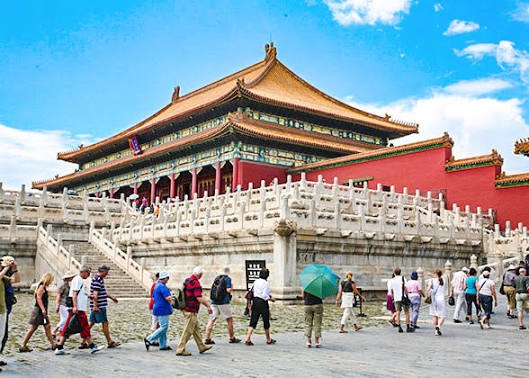
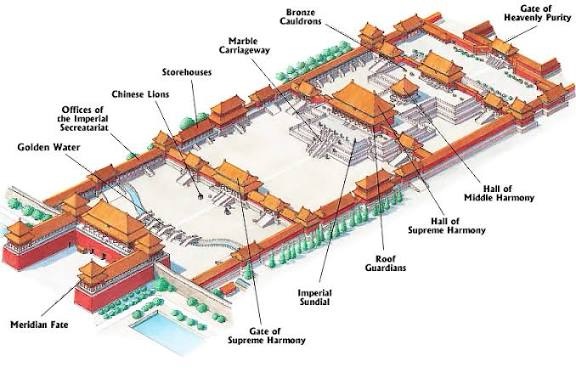
The Forbidden City

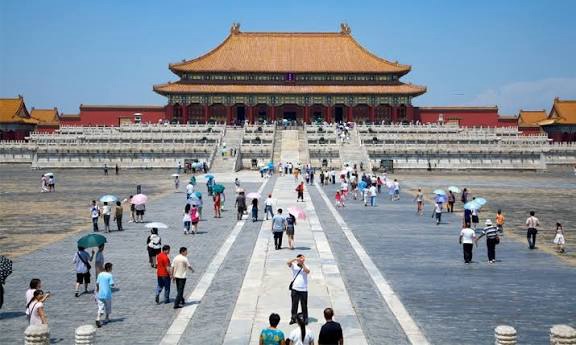
The Forbidden City is situated in the centre  of Beijing, north of Tiananmen Square. It is the world’s largest imperial palace complex, serving as the ceremonial and political center for 24 Ming and Qing dynasty emperors from 1420 to 1924. It was the seat of supreme power for over 500 years.

The Forbidden City is a 72-hectare UNESCO World Heritage site with over 900 buildings and 9,999 rooms (according to legend) designed with strict Confucian principles of hierarchy. Today it is the Palace Museum, featuring traditional Chinese architecture, yellow-glazed roofs, and vast, historic, red-walled, wooden structures. It is is the best-preserved ancient wooden structure in the world.

The Forbidden City remains a crucial symbol of Chinese cultural history and is one of the most-visited museums in the world. As one of the main visitor attractions in Beijing tickets must be booked online in advance, often requiring 7 days’ notice due to high demand. Tickets cost about £4.60 per adult.  The main public entrance is the southern Gate of Heavenly Purity (Meridian Gate). A full day is recommended to explore the site, which includes museums within the halls.  Please note it is closed on Mondays. Lots of tours which include the Forbidden City include it with visits to other places.
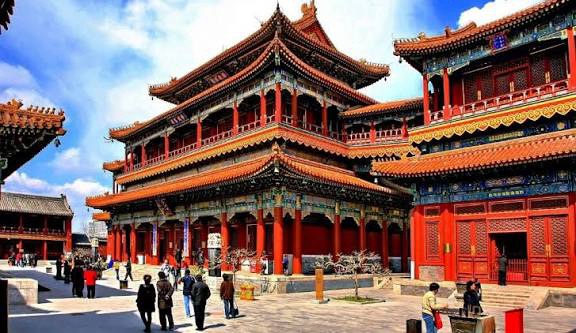
Lama Temple 

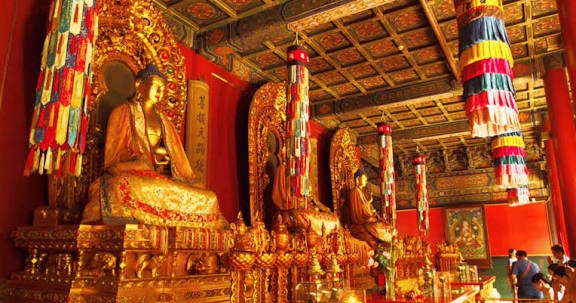
Lama Temple is officially known as the Yonghe Lamasery Temple, it is Beijing’s principal and largest Buddhist Temple. In fact it is the most  renowned Tibetan Buddhist temple outside of Tibet.

Located north of the Forbidden City, the Lama Temple  is a combination of Han Chinese and Tibetan architectural style, and was built in 1694 during the Qing Dynasty as the residence for the Yongzheng Emperor when he was a prince. After Yongzheng gained the throne in 1722, half of the Lama Temple was converted into a monastery for monks of Tibetan Buddhism, while the other half served as an imperial palace for the emperors.

The temple has five main halls, it is a series of beautiful pavilions and  breathtaking statues and artefacts. It features an impressive fifty-four-foot high Buddha carved from one piece of Tibetan sandalwood.

Lama Temple is situated at No.28, Yonghegong Street, Dongcheng District, Beijing. This popular tourist attraction opens between 9.00-16.30 and the ticket price is approx £2.60 per adult. 
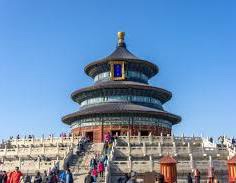
Temple of Heaven 

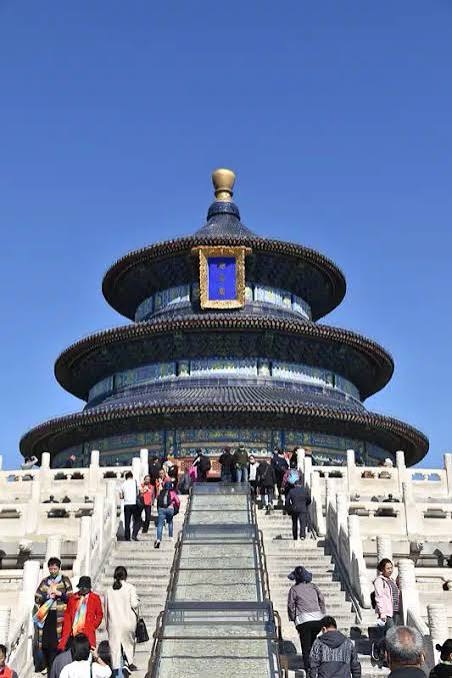
The Temple of Heaven, is located in Southern Beijing in Temple of Heaven Park. This 15th-century imperial complex of religious buildings is where Ming and Qing dynasty emperors worshipped and prayed for good harvests. 

The Temple of Heaven became a UNESCO World Heritage site in 1998 because it represents a masterpiece of Ming/Qing architecture. The layout emphasizes the concept of “round heaven, square earth,” with circular buildings often on square foundations. The complex spans a 267-hectare park and is best visited in the early morning to see locals practicing tai chi, dancing, and playing games.  The park is vast; consider using a combined ticket. A ticket for the Temple of Heaven pass and an English speaking tour guide can be booked through the Klook APP  for £10.20 per adult or just a Temple of Heaven admission ticket is £2.29. 
Places of interest we want to see and things to do on our proposed forthcoming trip to Beijing China…Part 2

Summer Palace

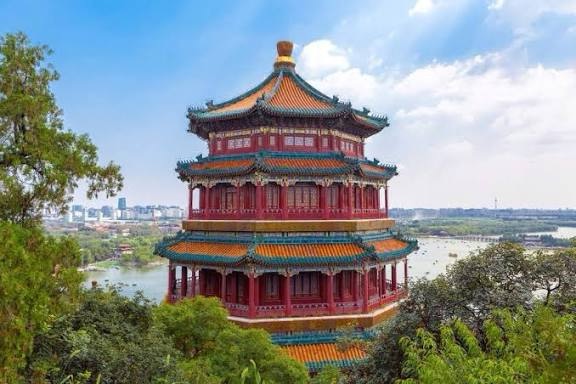
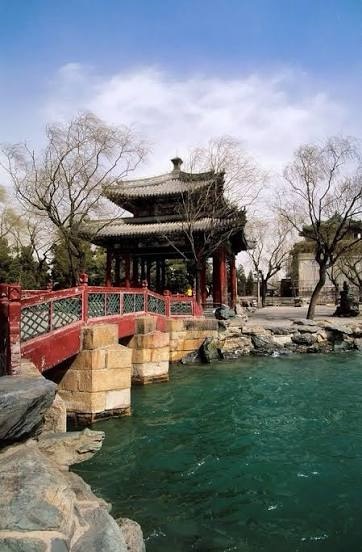
The Summer Palace (Yiheyuan) in Beijing is a vast, UNESCO-listed imperial garden from the Qing Dynasty (1644-1911). It is located in the western suburbs of Beijing, and 15 kilometers away from central Beijing. It covers an area of 3.009 sq. km, three quarters of which is water. The Summer Palace is renowned for being one of the largest and best-preserved imperial garden in China, it is regarded as a “Museum of Imperial Gardens”. It features Longevity Hill and Kunming Lake.  IT is the former summer retreat of emperors offers scenic landscapes, the 700-meter Long Corridor, and the Marble Boat, making it a premier tourist destination. 

While the cost to enter the palace is modest, about £8, the lines to buy tickets are often long and you need to carry Chinese cash. Pre-book online to gain access by Tickets QR and enjoy the imperial garden at your own pace. 

Tiananmen Square 

Tiananmen Square is an open square in the centre Beijing, it is one of the largest public squares in the world. Tiananmen Square was originally designed and built in 1651. It was enlarged to four times its original size and cemented over in 1958. It covers an area of 100 acres (40.5 hectares), and each flagstone is numbered for ease in the assembly of parades. The square gets its name from the massive stone Tiananmen meaning “Gate of Heavenly Peace”. It was first constructed in 1417, this was also once the main gate to the Forbidden City and is situated at the  northern end of the square.

On a tiered marble terrace in the centre of the square is the Monument to the People’s Heroes. The museum on the east side of the square is the National Museum of China. This was created in 2003 by combining the former Museum of the Chinese Revolution and National Museum of Chinese History. To the south of the Monument to the People’s Heroes is the Mao Zedong Memorial Hall in which the body of Mao Zedong lies in state. Further south is the Front Gate (Qianmen). On the western side of the square is the Great Hall of the People. It is the site of the annual meetings of the National People’s Congress it  contains a meeting hall with more than 10,000 seats and a banquet hall capable of seating 5,000.

Due to its immense size Tiananmen Square has been the rallying point for student demonstrations for decades. Two of the most notable were the May Fourth Movement (1919) and the Tiananmen Square incident (1989).

About our planning of our forthcoming trip….

When we plan a holiday to a new place, we research it and work out the places we want to visit and how long we want in each place.

We are going to start our trip in Beijing. There is a lot to Beijings history and plenty of historical sites we want to see, a culture we want to experience, enjoy and learn about….

So I will share with you our research…hopefully you too will be inspired to visit this intriguing country and see the sites which interest you.….

A brief history of Beijing – as I understand it…

Beijing became the capital of the People’s Republic of China in 1949.  It is a city with over 3,000 years of history. It has evolved from the ancient states of Yan and Ji to the capital of the Yuan, Ming, and Qing dynasties. As the political, cultural, and scientific hub of China, it boasts landmarks like the Forbidden City and served as a crucial strategic location against northern nomadic tribes. 

 In prehistoric times the area around Beijing was inhabited by some of the earliest-known human beings. Beijing was home  to the ~500,000-year-old “Peking man” fossils. It served as the capital of the State of Yan between 7th Century BC – 221 BC. 

The 10th- 14th Centuries were known as The Imperial Rise  The Khitan (Liao) and Jurchen (Jin) dynasties made the city a regional capital.

Between 1271-1368 the Yuan Dynasty in which Kublai Khan established his capital, Dadu, marking the first time all of China was ruled from this location.

Ming (1368–1644) & Qing (1644–1912), renamed Beijing in 1403. At this time it became the established capital, with many famous landmarks like the Forbidden City built during this time.

During the early Republic and Japanese occupation (1937–1945), Beijing officially became the capital of the People’s Republic of China on October 1st 1949. 

The city was designed around strict geomantic principles, resulting in a grid system with the Forbidden City at its heart.

The Qing Dynasty expanded the city, adding significant structural, social, and military components, such as the division between the Inner and Outer cities.

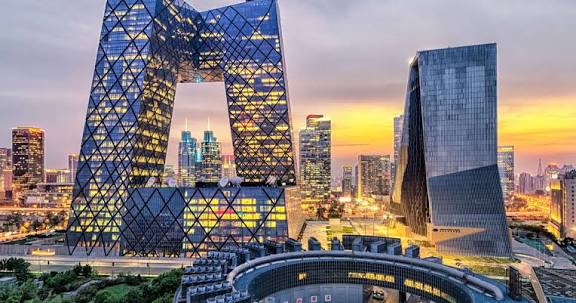
Beijing transformed into a massive, modern metropolis following 1949 and after the 2008 Olympics while it still tries to balance its ancient history with modern architecture.

The sites we want to see and the experiences we want to have in and around Beijing are :

THE GREAT WALL OF CHINA – 

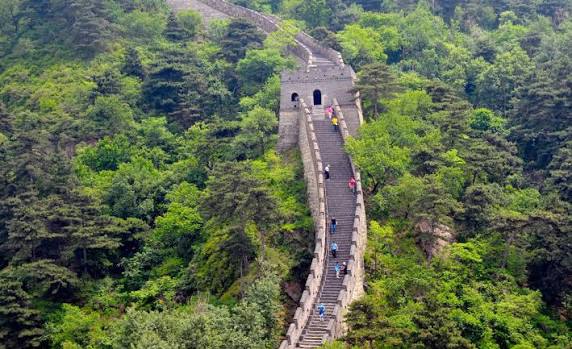
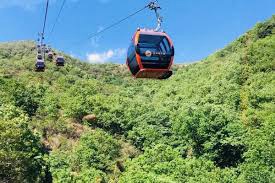
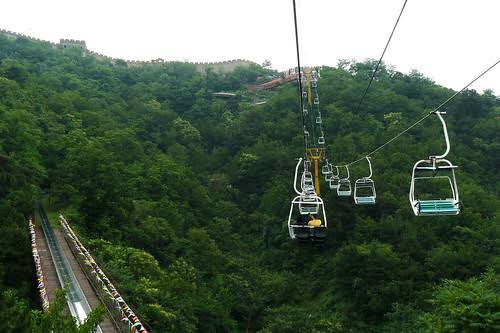
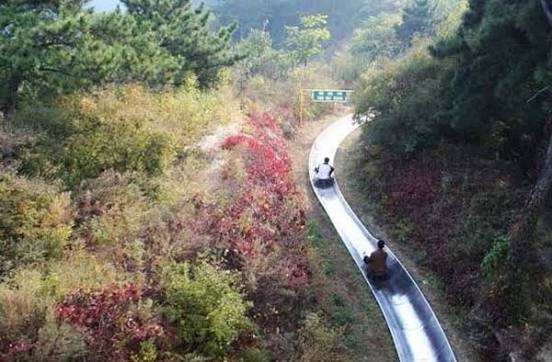
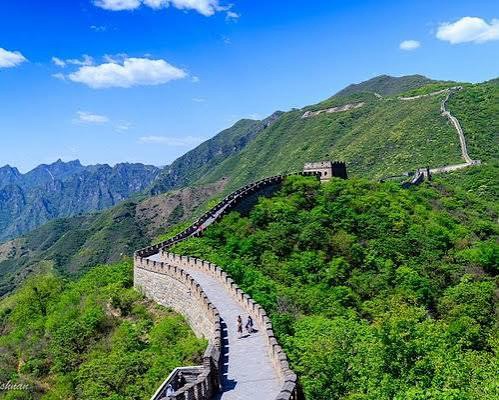
The Great Wall of China is located roughly 60–130 kilometers (35–80 miles) from central Beijing, with popular sections like Badaling and Mutianyu reachable in about 1.5 to 2 hours by car or train.  The Mutianyu Section is known for being less crowded. A round-trip cable car ticket is roughly 140 CNY (£15). The cable car takes you to Tower 14, and you can also purchase a popular chair lift up and a toboggan ride down from the wall.

Historically, the Great Wall of China was built to fortify China’s northern border. The Great Wall has been the site of multiple battles and skirmishes between the Chinese and various peoples across history, including the Xiongnu during the Qin Dynasty the Khitans during the Song Dynasty and the Moguls during the Ming Dynasty .

The total length of all sections of the Great Wall of China  adds up to about 21,196 kilometers (13,171 miles), including overlapping sections that were rebuilt. The wall constructed during the Ming Dynasty the most well-preserved section, is about 8,850 kilometers (5,499 miles) long.

We will continue to show you our research of more places we intend to visit in Beijing in forthcoming days…

China 2026 –

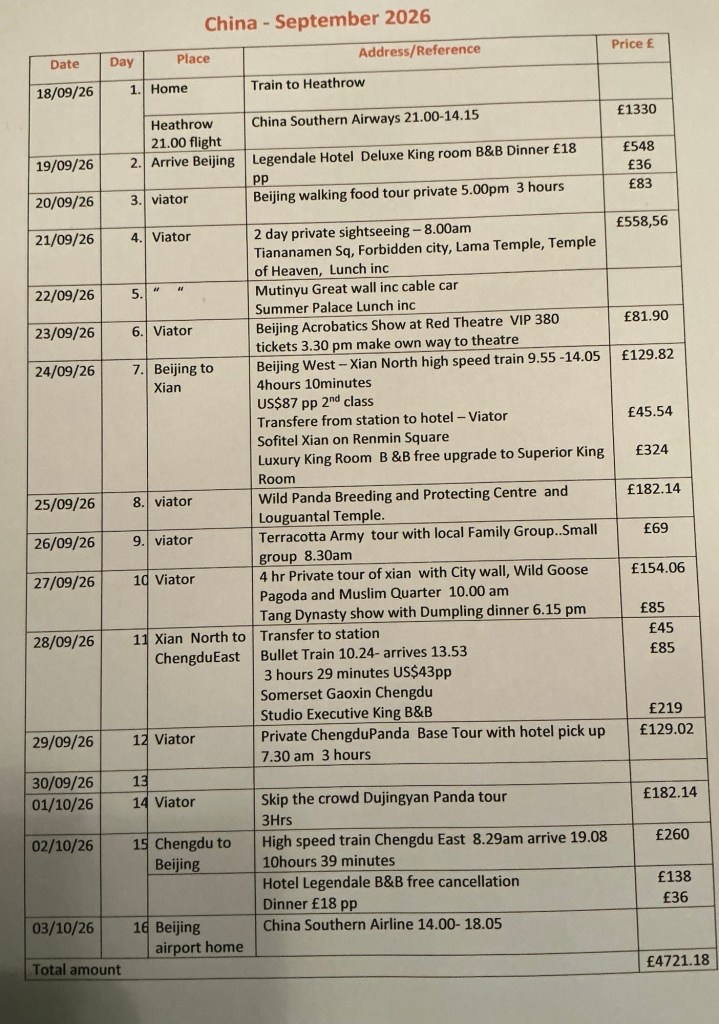
Still planning this trip…..we have brought it all forward a week….because 1-7th October are a Chinese holiday and the information we’ve received says it would be incredibly busy …so best to steer clear of National Day…sometimes called Golden Week.

The other Chinese holidays this year – 2026

1 Jan to 3 JanThu to SatNew Year Holiday

15 Feb to 23 FebSun to MonSpring Festival

14 Apr to 6 AprSat to MonChing Ming Festival

1May to 5 MayFri to TueLabour Day Holiday

19 Jun to 21 JunFri to SunDragon Boat Festival

25 Sep to 27 SepFri to SunMid-Autumn Festival

1 Oct to 7 OctThu to WedNational Day Holiday

At present we are awaiting quotes on having a driver and tour guide for all the parts I’ve costed with Viator. It could work out much cheaper and give us greater flexibility……more of that when the quotes are in and I can finalise the itinerary.

2026 Holiday Ideas China

We are beginning to put together ideas for our 2026 holidays. We are off to Scotland in May for 3 weeks and we are also fitting in other UK based breaks as well as nipping over to Spain to see family. However our main overseas holiday this year is a toss up between China and Egypt…but our thoughts are that we will do China later this year and Egypt next year ( because we’ve been to Egypt before). We have never been to China and there are certain sights we want to see.

Like every place in the world people will say “Why didn’t you go to see” this or that…. Well my answer is that you sometimes just want to see what you want to see!!!!!

We’ve put the package we want to do together… and I’ve now emailed it to Maisie Morton at DialAFlight…(+441618418179. Maisie.morton@dialaflight.co.uk) to see if she can work her magic on it. I want to bring it down further in price which I can do by changing hotels and breaking some tours down…but at the moment I have put the skeleton together with some meat on the bones to give us an idea of what we want to do and see…….one of our main reasons for going is to see Giant Pandas and also the Terracotta Army and the Great Wall of China.

26/09/26 meant to read with local family meal !!!!!!………… we did something similar in India a few years ago and it was a lovely experience….

I’ll let you see what Maisie has to say and what we decide on.