South Africa Safari 2025 Day 11 The day of the Ant Hills

We had a slow start to the day, I’d had to take an antihistamine which knocks me for six and it takes a good long sleep for my brain to catch up with my body. It’s not unusual when we are away, my delicate skin doesn’t like detergents, at home we use one for babies🤣🤣 consequently after about a week I end up itching like a baboon🤣🤣🤣hence the necessity for anti histamines….anyway that aside we have also been doing a lot of driving so we decided to take it easy.

John made lunch and elevenses – rolls..I had marmite in one and cheese and marmite in another, he opted for just cheese. We had a couple of yogurt before we set off at around 10.30 am.

We headed down the tar to the Phalaborwa gate, as we wouldn’t be doing this route at any other time. It was a slow day for game. The plains are dry with nothing to eat for grazing wildlife. This area has always been strewn with huge anthills.

Time hasn’t changed this they were everywhere old and new, large and small standing out like the Egyptian pyramids as far as the eye could see, to the horizon and probably beyond.

These termite mounds are called Macrotermes mounds or heuweltjies as the locals call them ( means little hills in Afrikaans). They are inhabited by termites which build an underground network of tunnels and nests The mounds are made of a combination of soil, termite saliva and dung. The extensive tunnels and alleyways are used to control the temperature inside the mound. The heat is pushed up through the chimney type structure. Termite mounds usually last longer than the colonies of termites themselves. The disused mounds are often used by other species of animals. The warthog is particularly partial to digging a hole in the mound and reversing in blocking the entrance with its head so it can still look out. We always keep an eye out for the elusive aardvark and the, never seen by us, pangolin, both of whom enjoy feasting on termites.

After initially sighting a pair of giraffe and some Waterbuck we clocked up a lot of kilometres before seeing anything other than ant hills.

Eventually we came across a herd of huge tuskers at a water tower quickly followed by several giraffe.

At the gate we asked security if we could use the toilet. We parked inside the park gate and walked back to the loos the other side…wow it was mayhem…coaches trying to get in, cars queuing to get in, vehicles queueing to get out….we’ve never seen an entry gate like it…there were dozens of security checking vehicles, police organising the traffic, a few very shady characters loitering around….how things change over time, this used to be a very quiet sleepy gate with little or no traffic. We quickly used the loo and returned to the car.

We took the dirt road back, with the hope of seeing a little more. We did see a few impala, two zebra and another herd of elephant. Not long after this sighting a car coming towards us flashed us so we stopped….the lady looked like an honorary ranger and if she wasn’t one she should have been…her enthusiasm in sharing her recent sighting was infectious………”Take the next left track, then take the right one then 5 kms further there are two mating lions at the side of the road…it’s quite along way 36 kms further but this road is dead” she gushed at us….we said thank you and decided to follow her instructions…..about 15 kms further on another car stopped us the young man and his lady informed us “there are two mating male lions in about 15 kms”, we thanked them and continued…when we were well out of sight of these kind youngsters we had to chuckle with each other “ I don’t think we’ve ever seen two mating male lions”🤣. Our information was very correct to the exact kilometre we came across and lion and lioness mating…. I must admit the lion was a handsome fella with a lovely mane.

Just before reaching the lions the river is very visible. On the opposite bank was the body of a dead hippo and literally dozens of different raptors feasting. It was a strange sight. I had read a face book post a couple of days ago with a picture of a hippo floating down the river with a crocodile feasting on it. I had presumed it was photoshopped, but seeing the sight ourselves, it was probably the same hippo.

We continued our drive around another gravel loop where the young couple had said they had seen 7 lionesses, but we were not that fortunate.

We returned to camp on the tar road enjoying seeing some more wildlife in particular along the riverside and on the bridge.

Our number count for today was considerably lower than on previous days…99+ impala but it took us until 5.30 pm to reach this number, 1 squirrel, 18 waterbuck, 4 crocodile, 3 lilac breasted roller, 1 grey heron, 36 elephant, 8 giraffe, 5 zebra, 11 kudu, 1 yellow billed hornbill, 2 red billed hornbill, 2 spoonbill, 2 quail, 5 Spurfowl, 1 steenbok, 1 terrapin, 2 lion, 31 Chacma baboon, 30 WBV, 3 warthog, 4 guinea fowl, ……. It was still a day full of wonderful sightings even if it wasn’t as prolific as previous days.

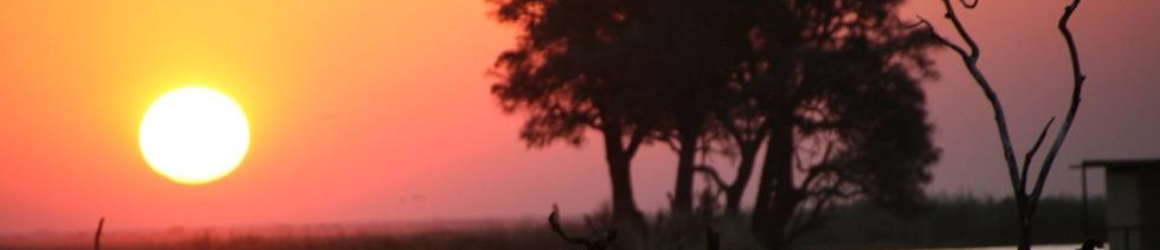
We finished our viewing by driving on to a nearby bridge and photographing the sunset and its reflection.

We ate in the restaurant before retiring to our chalet for a game of cards and bed.

South African Safari 2025 Day 10 – The day of the Waterbuck

After a restless nights sleep, which involved plenty of exercise in the form of getting in and out of bed to turn on and off the air conditioning, we prepared for our journey up to Letaba. The weather was very different to yesterdays….yesterday at 11 am it was 36 degrees Celsius where as today it was only 24 degrees Celsius. Letaba camp is about 90km north of Satara. We haven’t been up this high for probably 10 years….basically because the game has been scarce and sightings were few and far between. However we had been unable to book into Satara ( our preferred area due to prolific game) for longer, as it was full. So being flexible we decided to carry on up the park. John has never been to Punda Marie neither has he stayed in Shingwedzi. It must be about 20 years since I’ve stayed in the later…although for many years prior to this Shingwedzi was my favourite camp and I knew most the staff by name. We decided to stay 2 nights in Letaba before stopping in Shingwedzi for 3 nights….I couldn’t be persuaded to stay in Punda Marie, but have agreed to drive up there so John can have a look at the area. Many years ago I had booked Punda Marie, my son was a youngster and they provided me with a mattress for him on the floor…..the mattress was so old and stained that I wouldn’t even have let my dog sleep on it…disgusting..and it has put me off staying there ever since…I am certain 30+ years later it is absolutely fine but my memories remain vivid so for us it’s a no-no.

Back to the present…we had a meagre breakfast of 2 yogurts each and set off up the tar. The terrain is very different here…wide open flat spaces of nothingness. Our first half an hour was extremely enjoyable with 99+ zebra and wilderness traversing the plains.

After this our sightings became few and far between. We saw a few families of elephants in the almost dried up waterholes the road passes by. A couple of these waterholes had a flurry of mixed sightings. One in particular had zebra, Wildebeest, kudu and impala all streaming in longlines down to and then away from the water. A lovely view.

Some of the little streams of water had waterbuck on the shallow banks.

The Waterbuck is a large antelope, it has reddish brown course fur with white around its nose and eyes and a white collar around its neck. It also has a very distinctive “follow-me” white circle on its rump…many say this looks like a toilet seat or even a target 🤣. Like many antelope the waterbuck male has horns where as the slightly smaller female does not. The waterbuck is a very strong swimmer, it uses its hollow bearded neck hair for buoyancy. Its fur releases a smelly musky oil which repels water. We have also been told on numerous occasions by game rangers that the waterbuck also releases this oil when it is frightened. The lion is its main predator but has learnt to leave it alone because the oil it releases taints its meat which makes it unpalatable.

Our trip continued along the tar. As we drew closer to Letaba we decided to take one of the gravel road loops down and along the Letaba river. We saw zebra, elephant and impala.

We stopped at the edge of the water for elevenses. We are now reduced to park purchased processed cheese on some Woolworths crackers..not too bad. We watched three waterbuck walk along in front of us…they had a youngster with them. We saw a saddle-billed stork waddle along. An enjoyable half hour break from driving.

Our total viewing for the day was 99+ impala, 99+ wildebeest, 99+ zebra, 15 giraffe, 3 warthog, 2 grey Lourie, 6 kudu, 4 hippo, 37 elephants, 28 buffalo, 17 waterbuck, 2 steenbok, 1 bateleur, 1 saddlebilled stork, 1 squirrel.

We arrived at the Letaba reception at around 11.30….. too early for check in which is 2 pm. However we did book on to the sunset drive. We went to wait until check-in at the restaurant and decided to have a toasted bacon sandwich for lunch while overlooking the river, with its many islands which appear during the dry season.

At 2 pm we picked up our chalet key. Once again the chalet was the tired old variety but as it was on the perimeter fence we overlooked the river. It had a closed in veranda, with mosquito netting and wire , which makes you feel as if you are in a cage looking out🤣. This time we had a microwave, toaster, kettle ( thank heavens…can’t wait for a coffee), and full utensils but no hotplate or sink…however there is a large tub for putting your dirty dishes in and carrying to the communal kitchen to wash up….ummmm…no! I can’t see either John or I doing that so I guess it will be the restaurant for the next two nights🤣🤣

We arrived early for the sunset drive and our name was first on the list so we got a choice of where we wanted to sit. The truck was almost completely full, but this time with people who actually wanted to game view and knew the etiquette of the bush.

Off we set with our driver and guide “Happiness” . Unfortunate her name did not deliver. We saw lots of giraffes. Several were stood in “ push-me pull-me” positions. Lots of animals do this in particular zebras and impala, it is so they each look in different directions so they can see if any predators are coming.

The 3 hour drive showed us giraffe and elephant. A rather lovely sighting was a nyala buck and 3 cows in a dried river bed. As we were nearing the end of our drive we saw a black backed jackal, however Happiness was reluctant to reverse the truck so that everyone could see it. Just before we turned in the camp gate 2 hyena appeared, but once again Happiness didn’t reverse even though most the truck were asking her to….a little disappointing…..so for the first time this trip we decided not to tip….we don’t believe in tipping when it’s not earnt or deserving.

We headed for the restaurant and once again John had Venison pot pie and I had roasted chicken and …yes I did have a Savannah light🤣

The night saw us playing cards in the cage before an early to bed was required.

Portugal & Southern Spain Trip – Day 9 – Sunday 18th May 2025- Donana National Park – El Rocio.

A fitful nights sleep was had in our cupboard…too hot without the aircon and too cold with it, even set to 21…. So it was a very rude awakening, having finally gone into a deep sleep around 4.30 am, when the alarm invaded my musical snoring chorus at 6.40 am….does this time really exist ….cant believe that I used to be on my way to work at this time 7+ years ago….But needs must….I quickly showered and dragged on some suitable clothing whilst cursing John for being so awake and jolly at this unearthly time!!!!!
Breakfast was hard rolls which you toast to make them even harder, with nice cheese, ham, Salami, yoghurts, fruit, cereal and some fairly decent strong black coffee. By 7.15 we were ready to go in search of the National Parks office……back along the deep sand road we’d walked the previous evening. It was only about a 10 minutes walk. We queued to get to the ticket desk where we handed over our voucher. We thought we had paid at the hotel but the really nice English speaking parks board receptionists explained we had paid €24 to the hotel for the convenience of them booking it and now we pay €54 for the actual trip….ummm we’ll see if we’ve been ripped off when the Mastercard bill arrives…but we felt this was genuine so we handed over the Euros…cash only…and we were given a ticket stating Lucia 5, and told Lucia would call us to her bus….so we waited outside with the other eager visitors.

Sure enough at 8.00 am a couple of drivers arrived and shouted out their names. They were taken to the 24 seater 4×4 high tyred buses. Then a nice young lady came and shouted Lucia and we hurried after her to another identical bus. The number on the ticket was the number you were allowed to board the bus and choose which seat you want. We selected two seats next to a sliding window which we could open, so that John could stick his camera out of it…….

Lucia gave the commentary in Italian, Spanish and, thankfully, English. She told us the town of El Rocio had 1000 residents. In June they have a religious week/ festival which involves over 1 million visitors and 100,000 horses….Wow, unimaginable. She informed us a lot about the National Park. For the first time in 15 years the heavy rains had filled the marshes and the horses and some birds had retreated into the forest section of the park because the water was so high in the marshes. We saw a heron nesting in the wooded area, which she said was unheard of. We soon came across a couple of groups of deer browsing in the forest. There seemed a lot of excitement about seeing rabbits…they evidently are the bottom of the food chain for foxes and lynx to survive. But the rabbits survival had been threatened by the eucalyptus trees which drain the moisture out of the soil and prevent the natural undergrowth, which rabbits feed on, from growing. So the eucalyptus trees had been felled with only two remaining. Their stumps were moved to another area where the dead stumps were placed as a memorial to the trees and a good breeding ground for the rabbits. Lucia pointed out many species of birds including the black kite and the many storks, herons etc.

Before continuing into the wetlands Lucia explained that farmers were allowed to graze cattle and sheep etc and that they belonged to farmers where as the horses were just wild. The horses were managed by the parks board. We continued along a causeway which the farmers had built, across the marsh land, to make access to their cattle easier.
We stopped and stretched our legs on the causeway. There were dozens of different species of birds, flamingos, ibises, little and greater egrets, several types of heron, loads of different ducks like the poacher, teal, coot, moorhen , grebes, plovers and even the endangered Marbled teal……an ornithologists’ paradise.

We continued along the track to a visitors centre. This had toilets……but take your own paper!! ….. a coffee shop and a huge glass viewing area overlooking some Lakeland. We learnt there were over 4000 nesting birds in this area alone. Lucia set up her telescope and I managed to get a picture through it of a couple of flamingos….

There were plenty more pictures taken to capture the moment

On walking back to the bus we noticed not only the vibrant flora but also a stork nesting on an electricity pylon. There was a chick in the nest.

We were just about to re-board the bus when we heard the thunder of many hooves….it was a “Round-Up” with “Gouchos “ driving them along the road….there must have been 200+ horses and 4 herdsmen. We followed them down the road and they were driven into a corral through some water. Evidently they will be divided up into different areas from there.

On our return to El Rocio Lucia told us that the cork tree was now protected, not least because the Lynx often have their cubs in holes in the cork tree because it helps regulate their temperature. She told us there were several hundred Lynx in the park…she had seen one the day before.
At the end of our 3 hour tour we went back into the office and booked the 5.00 pm tour the following day with Lucia again. It had been a splendid experience. We wandered back to our hotel along the lake shores promenade which was a lot easier than trudging through the deep sand. The square in front of the hotel was again buzzing…a hive of activity…

We had a bite of lunch …a hamburger or so it was described but a rubber frisbee would have been a more accurate description. We wandered back to our cool, quiet hotel stopping on the way to chat to a very pleasant Australian couple who had been on the same bus as us……they are visiting Kruger South Africa at the same time we are later in the year…perhaps we’ll run into them again. After siesta on the terrace and a few games of cards we went in search of an earlish evening meal. We ordered grilled chicken which came with fries….unfortunately it was very tough and my gums are struggling with all the hard food and also the lack of vegetables…but hey Ho….a huge horse rode in behind John and breathed down his neck while his well manicured very smart rider had a fantastic brought to her.

What a surreal place this is…very busy, but an experience we wouldn’t have missed for the world…. Looking forward to tomorrows venture and fingers crossed for a sighting of a Linx.

Peacocks in Sri Lanka

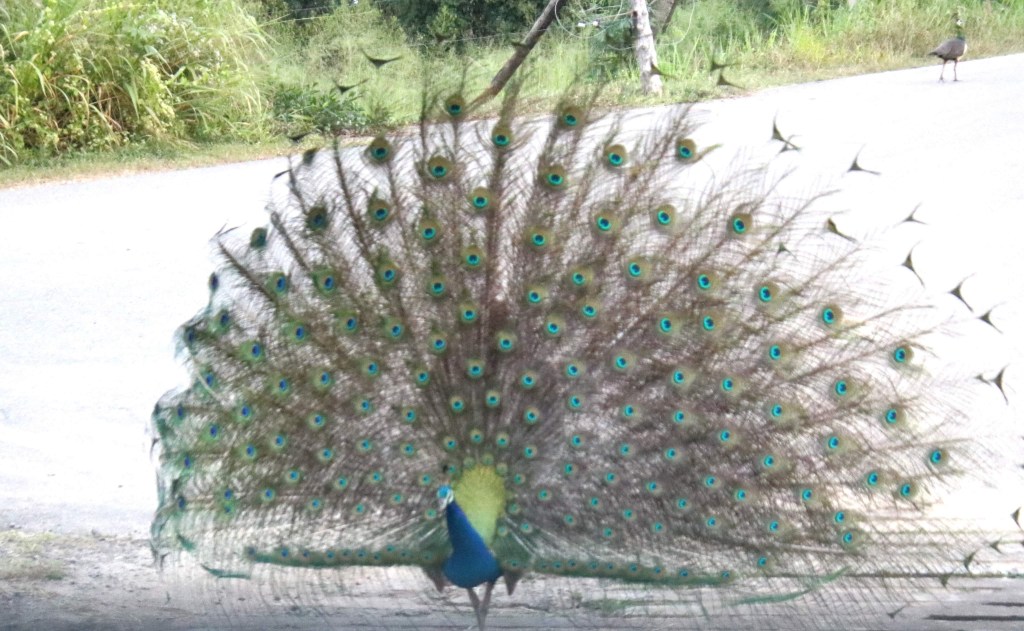
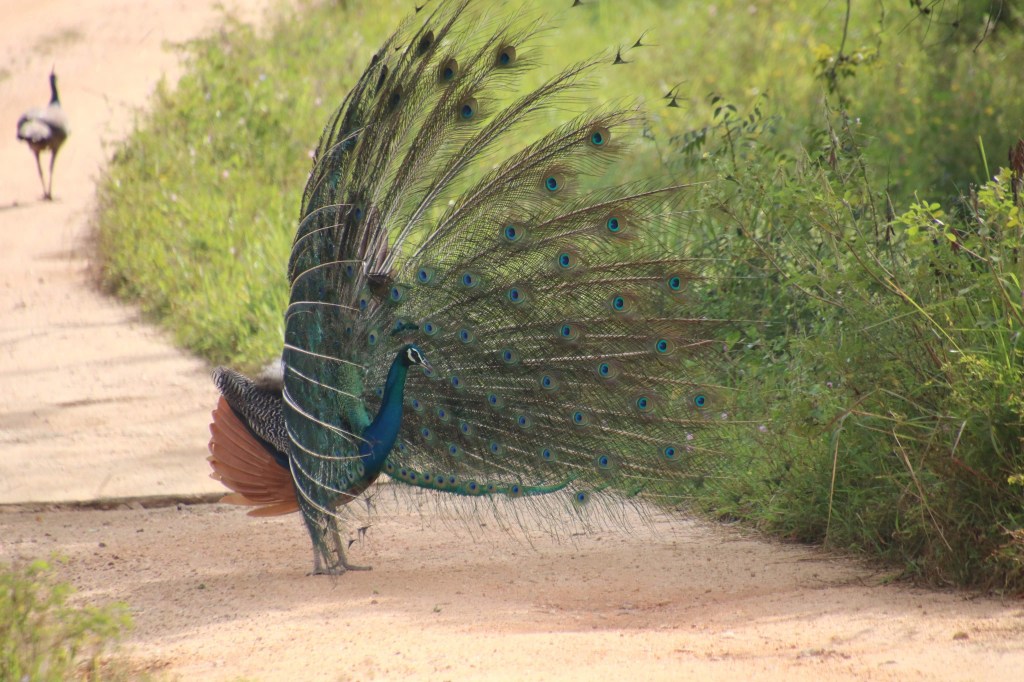
The Peacock is an absolutely stunning bird which is native to the island of Sri Lanka, it’s distinctive call can not only be heard all over the jungles but also in more urban areas. It is the largest of the pheasants and can also be found native to India. The male peacock has an absolutely stunning plumage, where as the female pea hen is a very plain brown bird with none of the lovely bright colours and ornamental feathers. They have an average life span of 20 years in the wild. The male attracts the female by stretching out its lovely feathers into a circular fan framing its neck, head and crown, dancing so that the feathers make a wonderful rattling sound, while shouting loudly. It is a magnificent display of courtship. One which we were privileged to watch on several occasions during our visit to Sri Lanka.

As you can expect a bird with these looks is surrounded in religious symbolism. It means different things in different cultures. It’s uniqueness and magnificent beauty makes it an easy symbol of power, strength, confidence and even divinity.

It is believed that they eat poisonous plants, insects and snakes. The Buddhist belief is that this beautiful bird represents wisdom and the ability to turn poison into beneficial nutrients. They also believe that that Peacocks are related to bodhisattvas, godlike beings, which come to earth to help humans gain enlightenment. This allows them to be like the Peacocks and turn “poisons of ignorance, desire and hatred into fuel for spiritual growth”.

Hindus in Sri Lanka also have a special place for peacocks. The God Kataragama, ‘Skanda’ sits with his wives and peacocks on either side. Lord Vishnu is often depicted with a peacock in the background.
With in the Islamic religion, Muslims interpreted the peacock as a bird of paradise, which is the gate keeper and guide to the people in heaven it is supposed to repel the devil and guide believers. The Peacock’s feathers are supposed to ward off evil spirits, it is seen as a symbol of beauty and elegance.

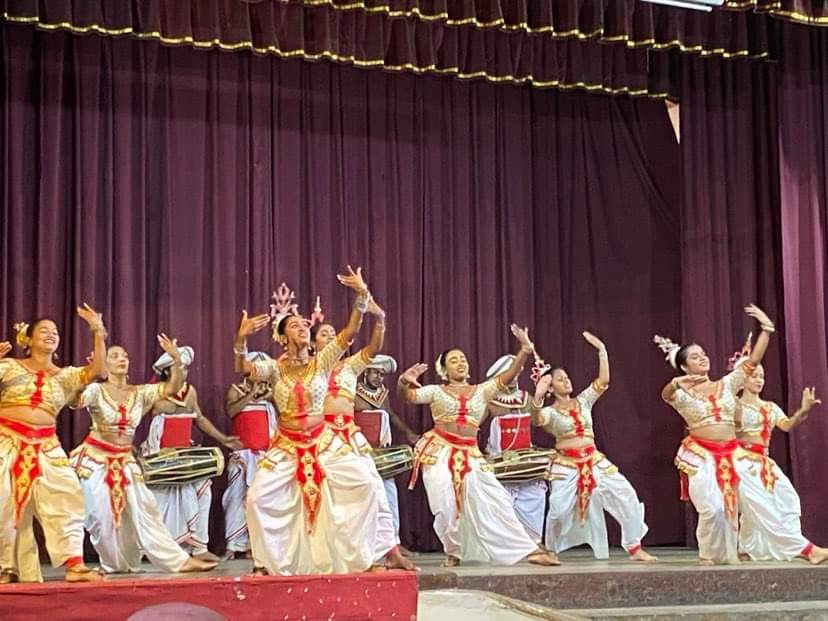
When visiting Kandy we went to see a cultural show. Part of the show was Kandyan dance. The peacocks play a big part in this, with an entire dance depicting the behaviours and looks of the peacock. This part of the dance is known as Mayura Natuma

Seeing these creatures displaying their beauty in the wild can only be described as a privilege.