It’s relatively easy to get to Xi’an either by plane or high speed train. We intend to travel from Beijing to Xi’an by train. It takes between 4h 10m to 6h 45m for high-speed (G trains)from Beijing West to Xi’an North. It costs about £60 each for a single ticket. These can be booked a couple of months in advance online with Trip.
Xi’an
Xi’an is the capital of Shaanxi Province in central China. In past times it was known as Chang’an (Eternal Peace). It is situated at the eastern end of the Silk Road’s and was home to the Zhou, Qin, Han and Tang dynasties’ ruling houses. The city is the third-most populous city in Western China after Chongqing and Chengdu. Its total population is around 12.95 million.
The City Wall
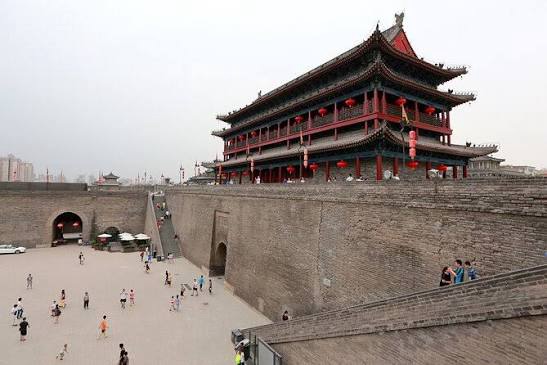
Xian’s original city wall was started in 194 BC and took 4 years to finish it enclosed an area of 36 km sq (13.90 sq mi). During the Ming Dynasty a new wall was constructed in 1370 which remains intact to this day. The new wall and moat would protect a much smaller city of 12 km sq (4.6 sq mi). The wall is one of the tourist sites in Xi’an.

The Terracotta Army
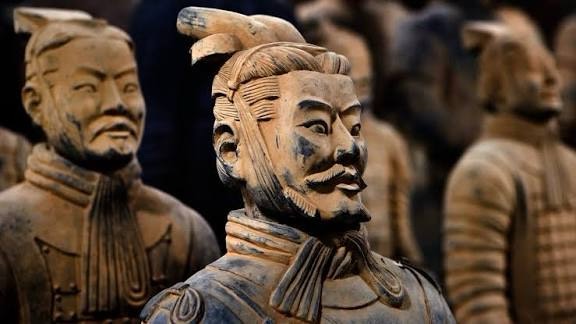
Xi’an is also famed across the world for the archaeological sites found in Xi’an’s surrounding plains. This is where you find the Bingmayong (Terra Cotta Army), thousands of life-size, hand-molded figures buried with China’s first emperor, Qin Shi Huang. The first emperor of China, Qin Shi Huang ordered the construction of the Terracotta Army and his mausoleum, just to the east of Xi’an , almost immediately after his ascension to the throne. The Terracotta Army is a collection of terracotta sculptures depicting the armies of Qin Shi Huang. It is a form of funerary art buried with the emperor in 210–209 BCE with the purpose of protecting him in his afterlife. It is said to have taken 720,000 people to build it.
The Terracotta Army figures’ excavation is regarded as one of the greatest discoveries of the 20th century. It had been underground for more than 2000 years before farmers digging a well in 1974 uncovered what is now considered one of the greatest archaeological sites in the world.
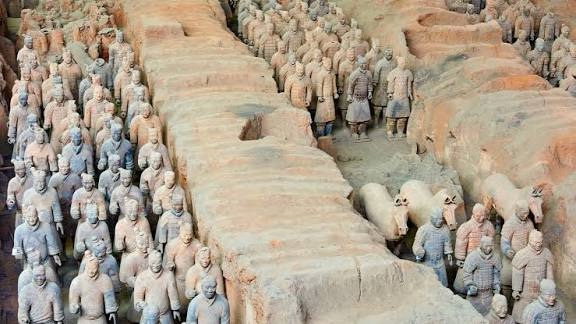
The first part of the Terracotta Army site to be discovered was named Vault One. In 1976, two other vaults were uncovered about 20 meters away, and were named Vault Two and Vault Three.
In December 1987, UNESCO selected the Tomb of the First Emperor and the Terracotta Army Vaults as a World Cultural Heritage Site.
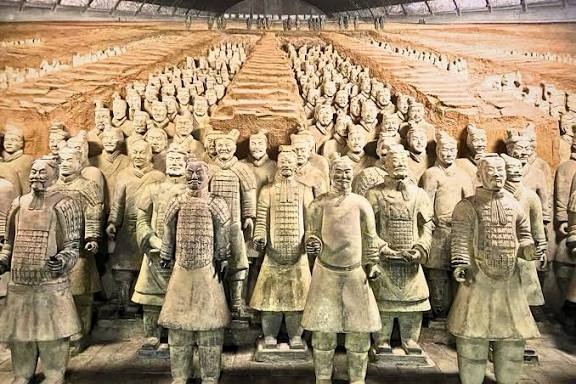
Today the museum consists of Vault One, Vault Two, Vault Three, and The Exhibition Hall of the Bronze Chariots. The most popular vault with tourists is Vault One. This can be crowded but is the best place for photographs.
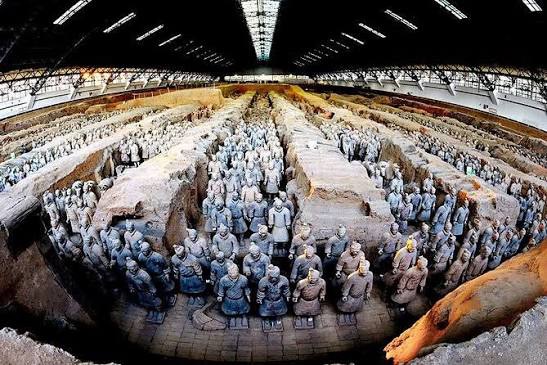
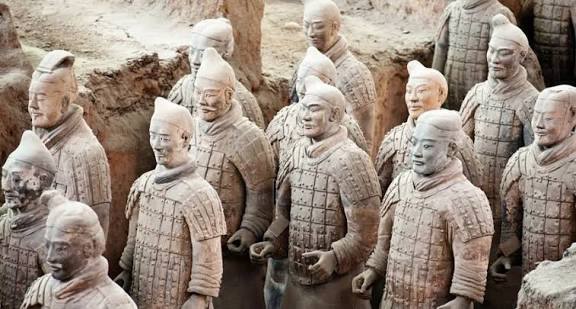
Vault One is the approximate size of an airplane hanger. It is said to have contained over 6000 terracotta figures of soldiers, horses and chariots, but today there are less than 2000 on display. However it is still a very impressive site. All soldiers and horses face east in a rectangular formation, each soldier is armed with either a long spear or a dragger. Close behind is the main force of armored soldiers are 38 horse-driven chariots. Every figure differs in facial features, expressions, clothing, hairstyle, and stature. The scene provides a lot of detailed artifacts in line with the military, cultural, and economic history of that period. The Vault was opened to visitors in 1979.
Excavation and restoration is still ongoing at vaults two and three.
The museum can be found at 1 Terracotta Road, East Third Ring Road, Yunlong District, Xuzhou City. It takes about 1 to 1.5 hours to travel from downtown Xi’an to the Terracotta Army, which is located approximately 40 km away in the Lintong District. The fastest option is a taxi or Didi (approx. 40–50 mins)This costs approximately £12.60. Allow a half day for your visit. The museum opens from 8.30am to 5 pm. Tickets can be booked online with Trip at a cost of about £8,50 per adult . This helps to skip the line and is a little cheaper than the £12.50 on the official website. It is worth checking to see if over 65’s go free, this is the case in some of Chinas tourist attractions. We will probably take a small group Viator which includes a half day visit to the museum and a lunch with a local family for £65 for us both.
There are also other visit options available some include making your own mini warrior to take home with you…it sounds intriguing but we prefer the family food option!
 2 J's World of Adventure