South Africa Safari 2025 Day 13 – The day of the Tsessebe.

“Oh it’s such a perfect day
I’m glad I spend it with you
oh such a perfect day you just keep me hangin on
you just keep me hangin on” …

….That’s what you do Mother Nature…..and then you deliver, time and time again. ……half way through this perfect day we both burst into song….after all, the birds, wildlife, trees and plants aren’t going to tell us to shut up are they. It was a lovely bright day with temperatures back to around 26 Celsius.

We had a slow start to the day…both showered and hair washed, clean cloths and just a small pot each of yogurt for breakfast, supplies need replenishing. John made rolls for lunch while battling to keep the vervet monkeys off the food and out of the kitchen…if it wasn’t the monkeys it was the glossy starlings and the squirrels….quite a sight to see John “sshhhing” them away…one monkey distracted him while another sneaked in behind …eventually he succeeded. I had in the meantime been sorting out the dirty washing ready to go to the laundry.

Our house keeper arrived just as we were leaving. I asked her where the laundry was and she pointed but then she said she would do it for me. I asked how much and she said anything I wanted to give her…so I said 150 Rands ( £6) and she beamed from ear to ear…I gave her the detergent and she said she’d bring it all back tomorrow morning…bless her. When we got back at lunchtime she had decorated our beds with the towels and leaves and pods and she had put a glass on a doily full of flowers next to our beds….Josephine you are a lovely lady.

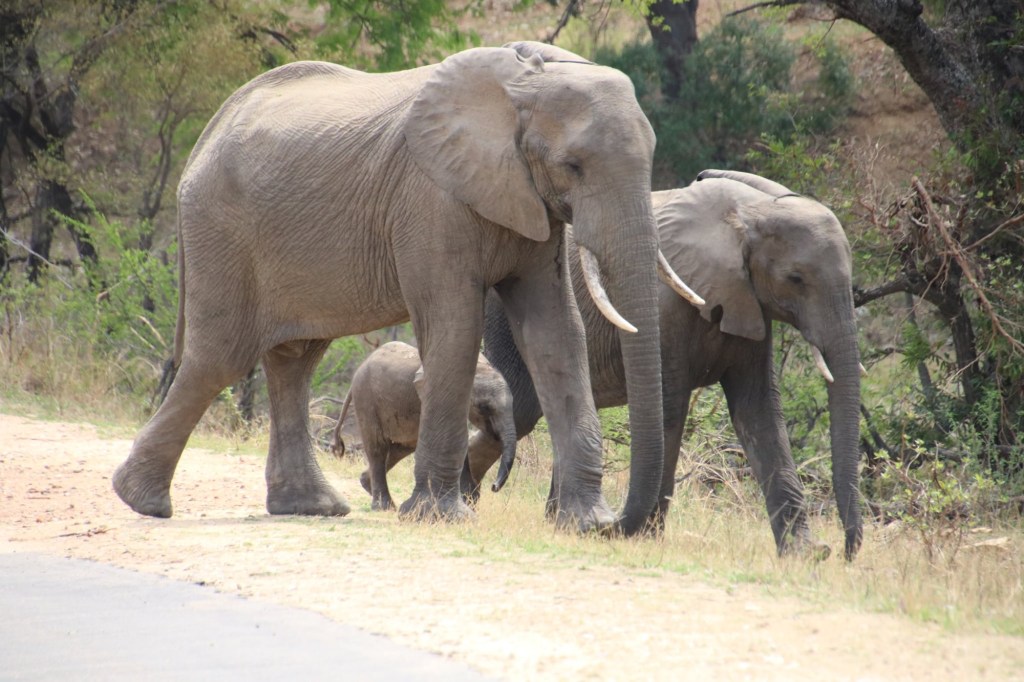
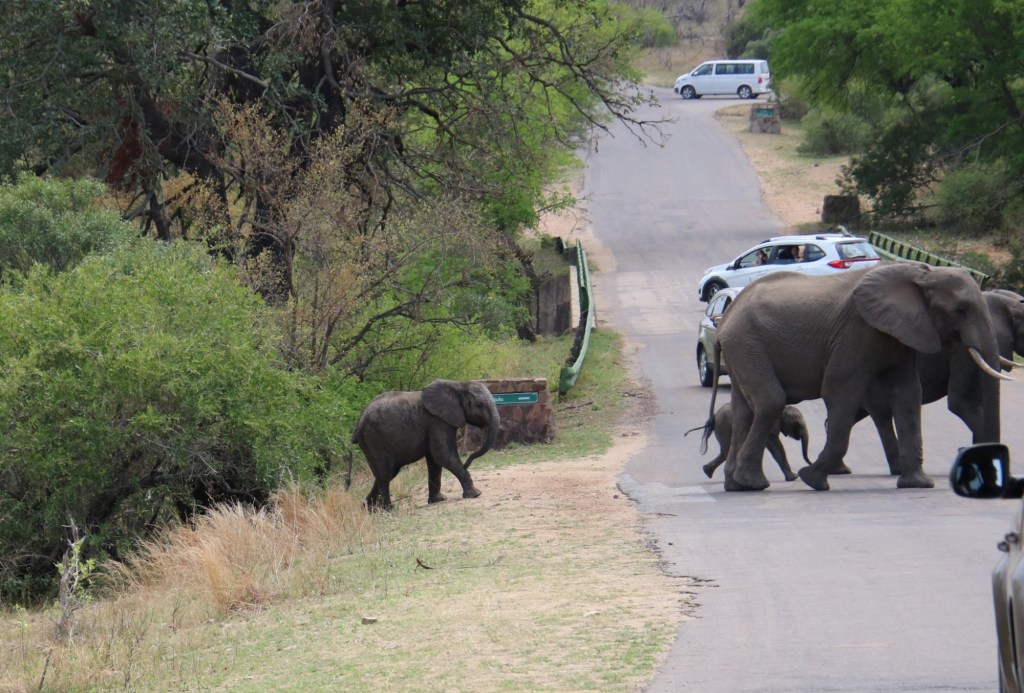
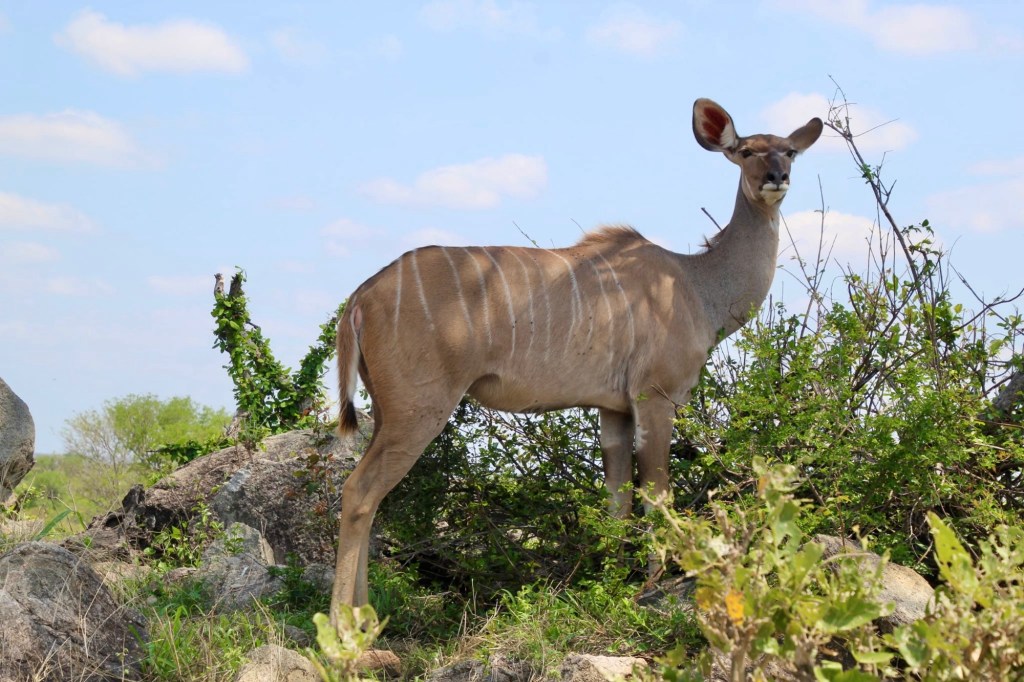
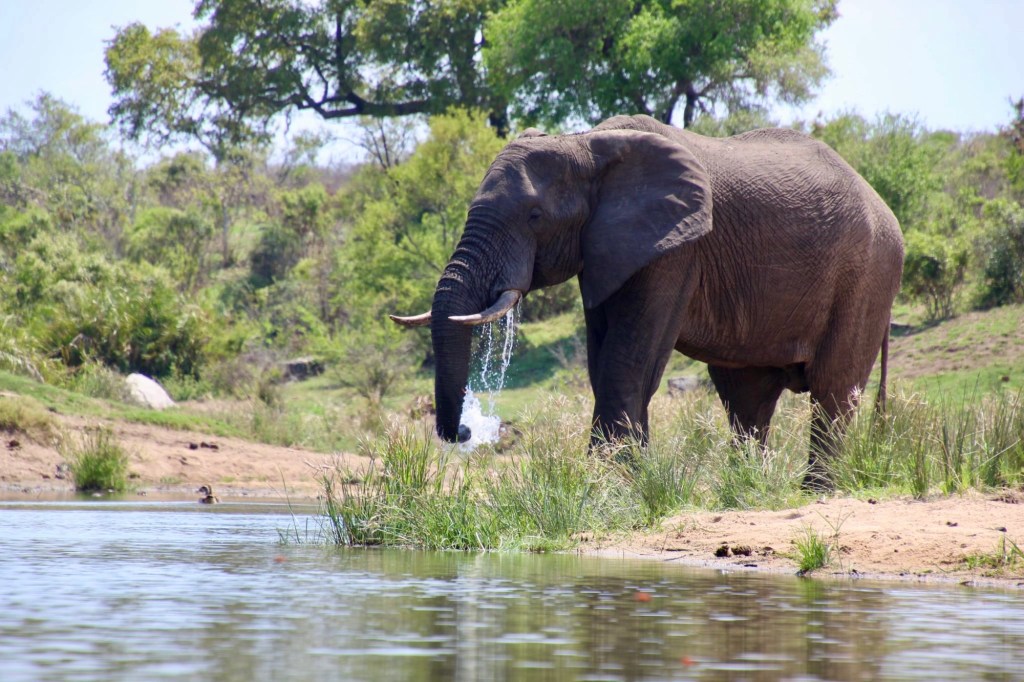
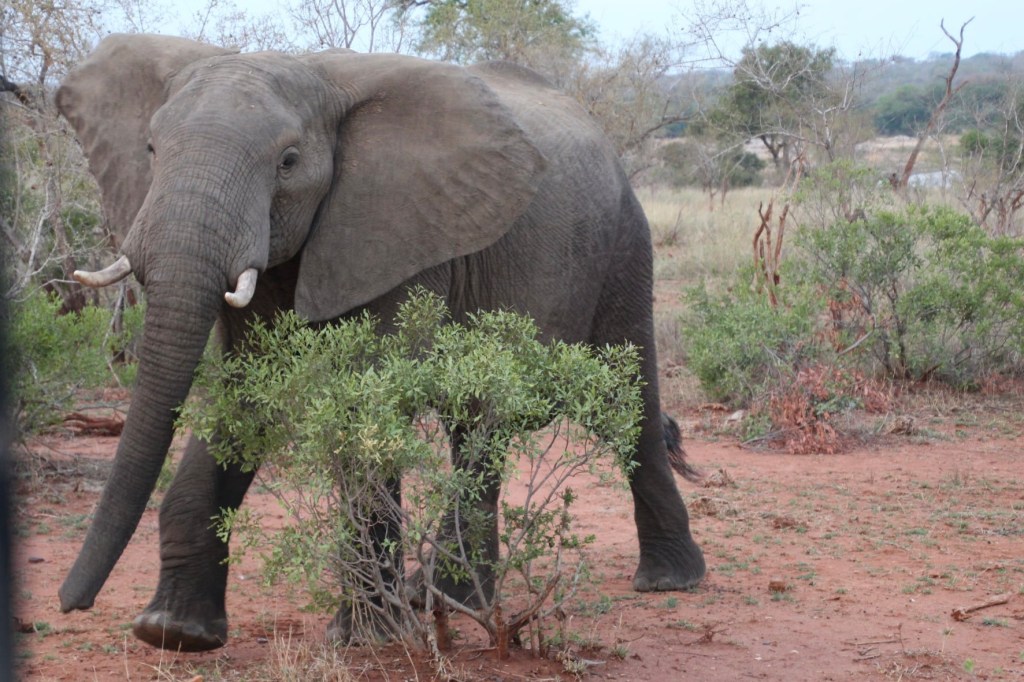
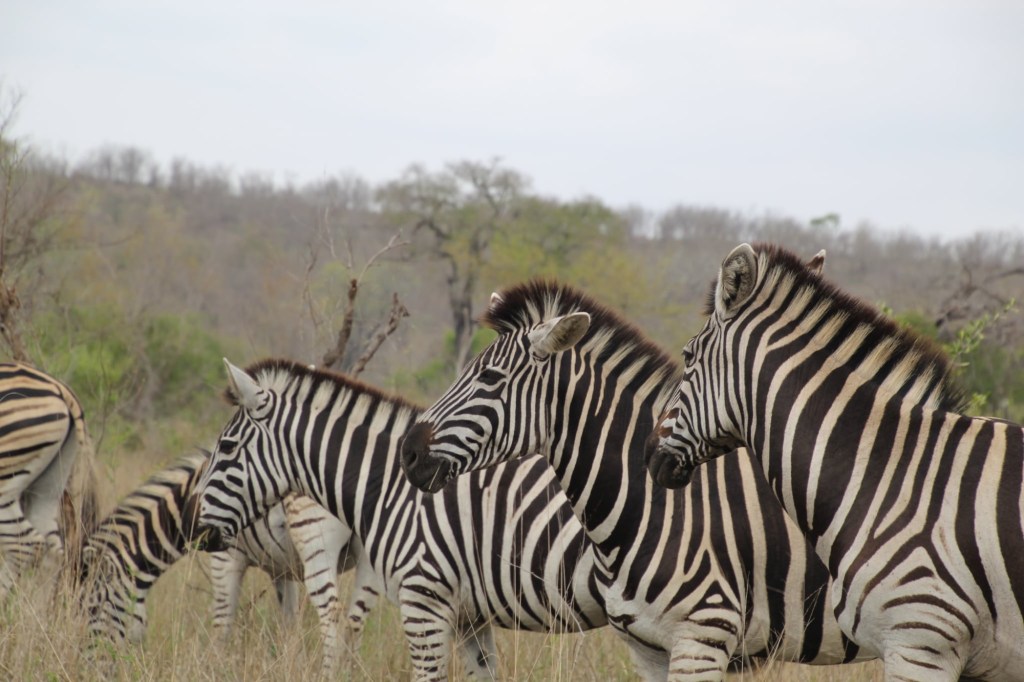
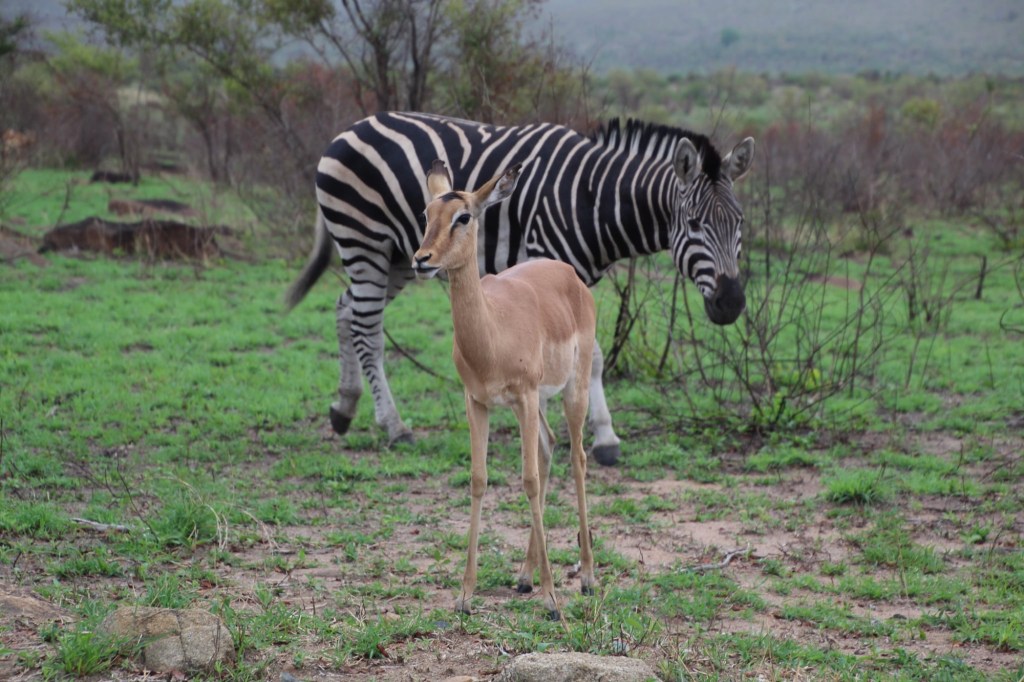
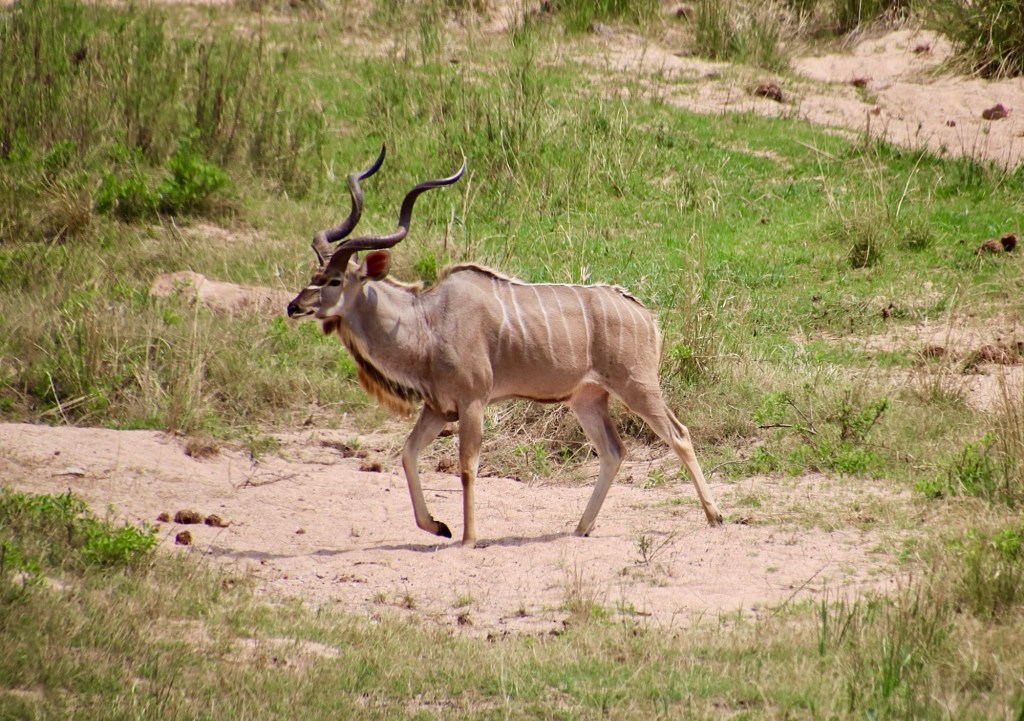
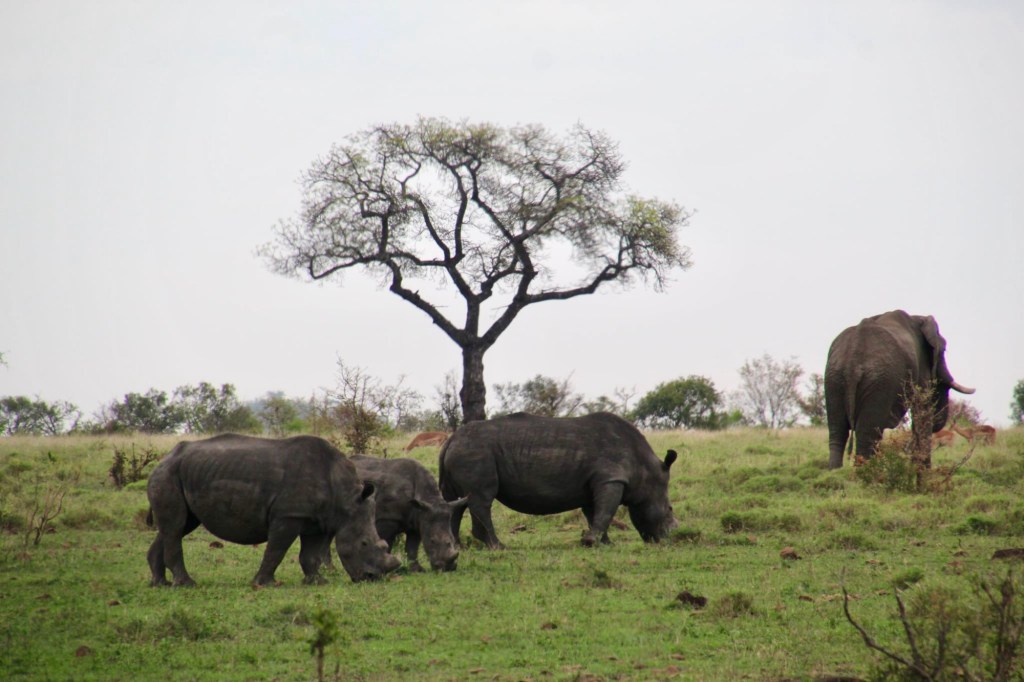
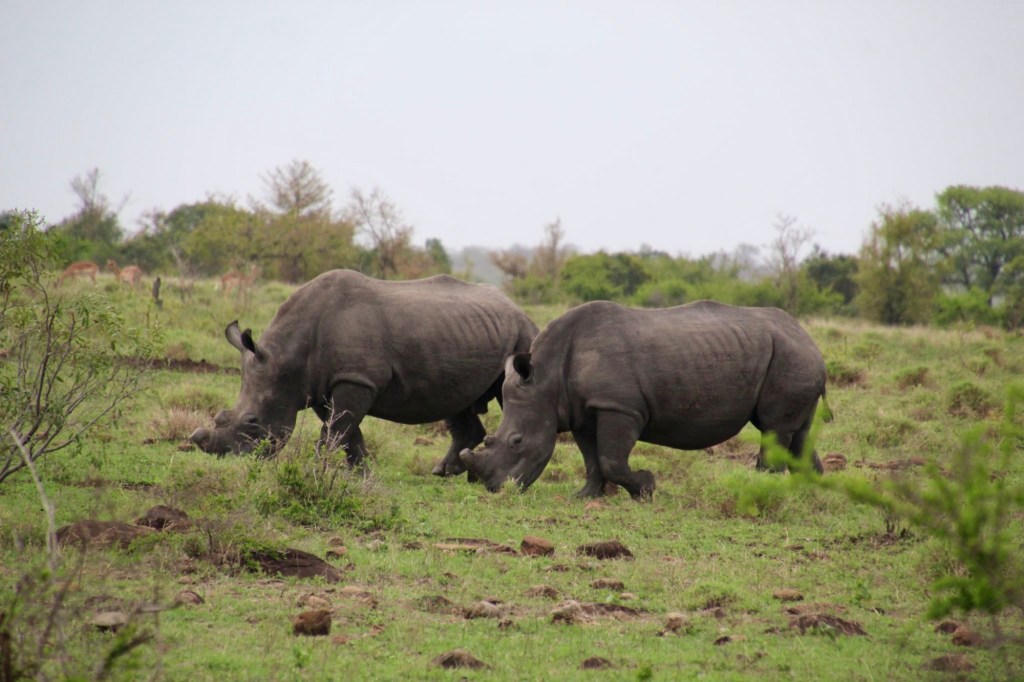
With the washing taken care of it meant we could go out game spotting much earlier. We went out of the back gate and headed along the river side….wow…it was prolific for game…within 10 minutes we had driven 2 kms and seen 8 different species……our first sight was a squirrel just as we left the camps gate. We saw loads of waterbuck, giraffe, elephants, small groups of dagger boys – old male buffalo, zebra, kudu, hippos, and of course we soon counted 99+ impala….for an area which has a reputation of being devoid of wildlife it was our most prolific day game viewing so far this holiday.

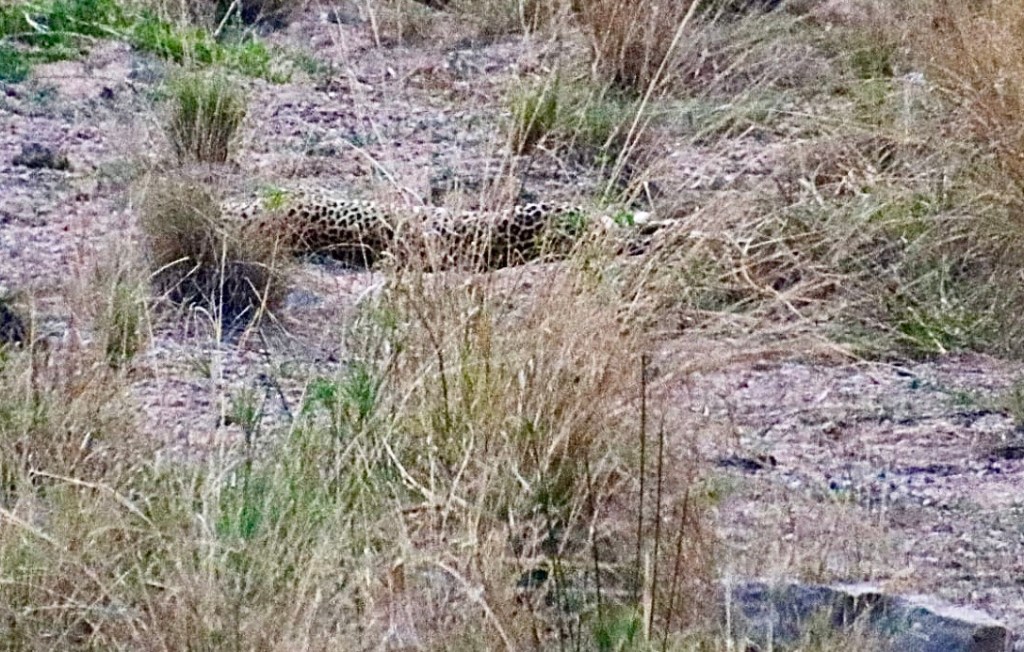
We spent along time looking up a tree with 2 other vehicles who informed us there was a leopard sleeping up the tree……if it was it was buried deep in the foliage of the tree …as you know leopards can sleep for along time and we decided to leave her to it.

We retraced our route back to camp. On the way back we came across a magnificent specimen of a bull Nyala…a very handsome male…he seemed to be on his own with no harem.

On arrival at the camp it was once again a hive of activity…bus and mini bus loads full of school children and locals. It was “heritage day” earlier in the week and we think the park drops the conservation daily fee for locals during the week. As we drove through camp I stopped and commented how beautiful a lady looked in traditional clothing, she wanted us to take her photo which we obligingly did…

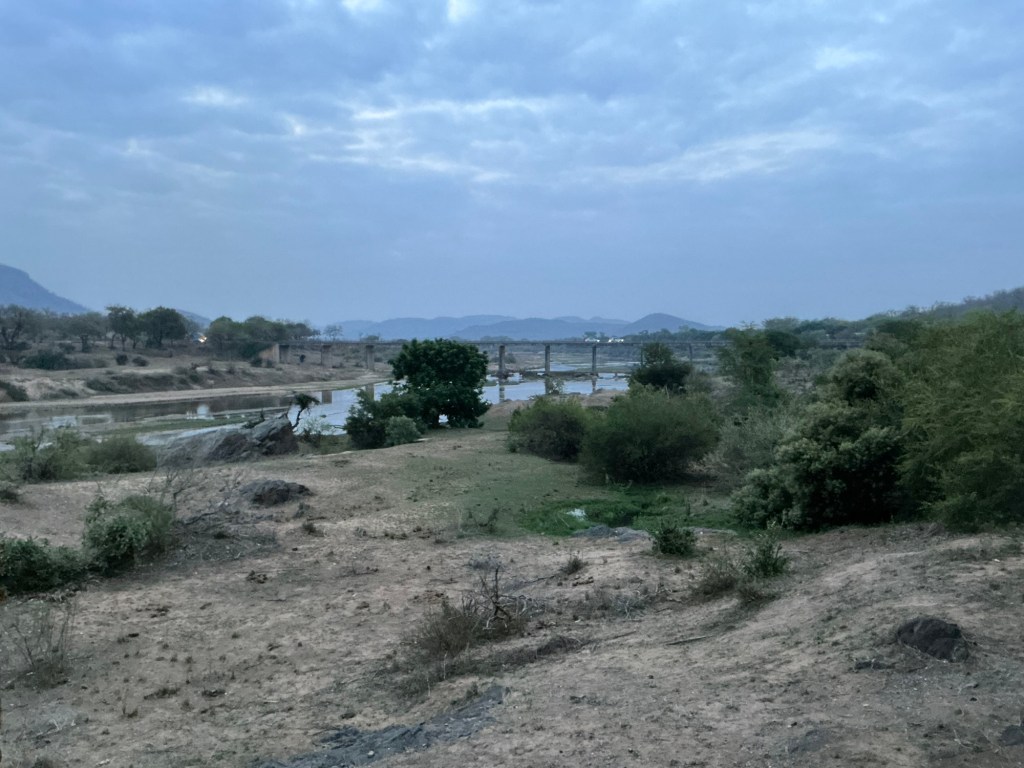
We stopped at our chalet for a quick loo break before heading out of the front gate….lo and behold on the opposite bank of the river were two tsessebe antelope.

The tsessebe has a strange name which is fitting for its rather strange look. It is larger and somewhat different in appearance than the other two animals of the same genus (blesbok and bontebok). Both sexes carry horns which are more splayed, and a black (rather than a white) blaze marks the face. The tsessebes upper parts are dark reddish-brown with a distinct purplish sheen and paler belly. They have a characteristic shoulder hump which is higher than its rump. The tsessebe is reportedly the fasted of all antelope and it can reach speeds of up to 90 km. It is a grazer and is often the first to arrive on areas after a burn as they specifically like fresh growth and shoots.

As we watched these rarely seen beauties another car stopped and asked us what we were looking at. We told them and they drove straight on, obviously neither appreciating the rare sighting or the beauty of this magnificent creature.

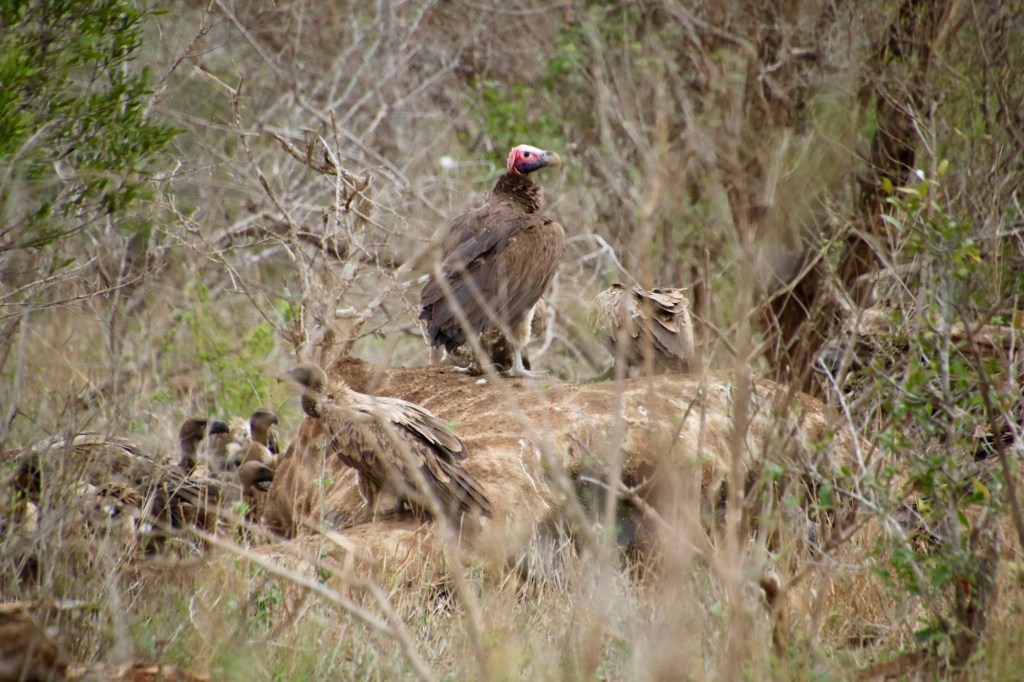
We continued out to the S53 where we had seen the lions yesterday. On the way we saw a lot of white backed vultures, elephant, zebra and a lone wildebeest. The S53 was no longer lion ridden, there was no sigm of them. Not far from where they had been, a group of Chacma baboons happily sauntered across the track. The thick undergrowth and vegetation makes spotting a challenge and photo opportunities near on impossible…

On our way back to camp we spied a very elegant martial eagle in a tree close to the road.

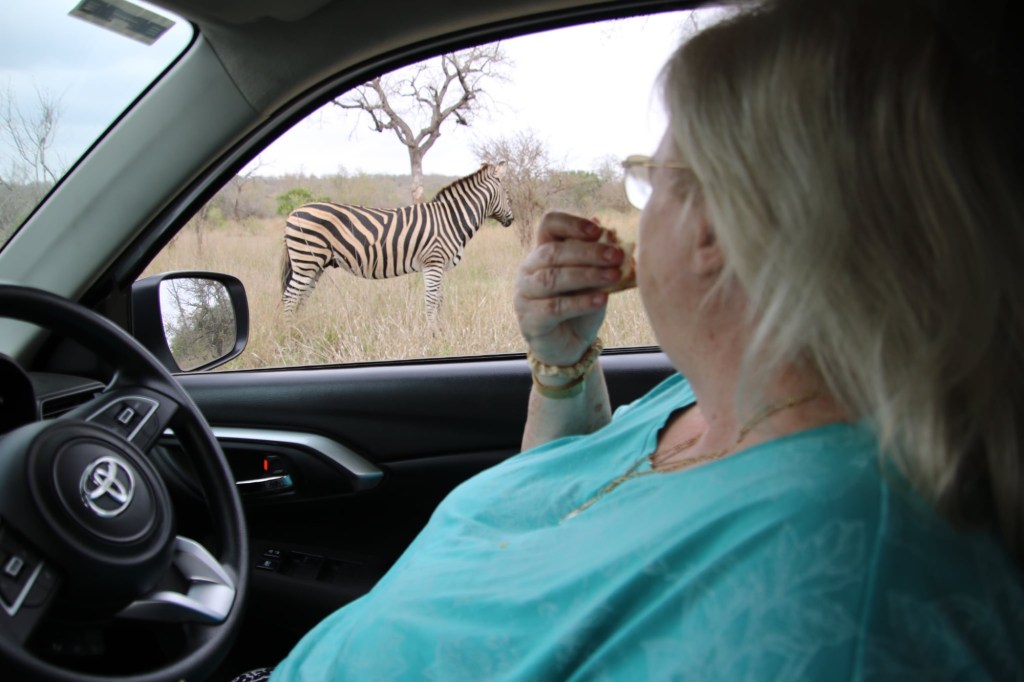
We watched aline of zebra cross the dry river bed and disappear into the bush. Stopping back at the tsessebe we decided to eat our lunch. Back in camp it was time for a rest.

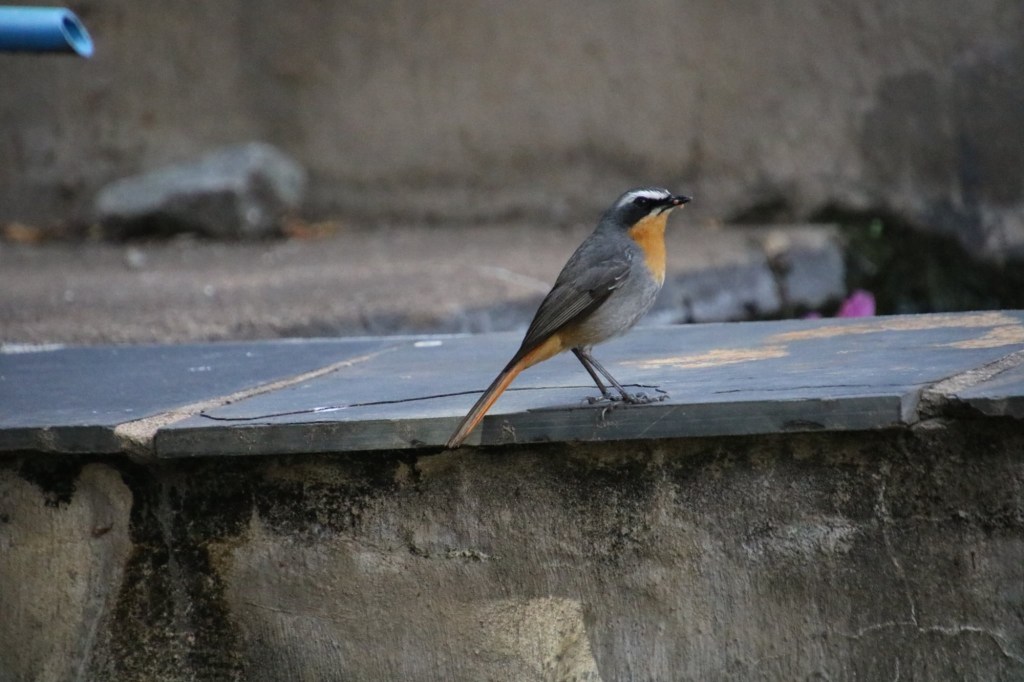
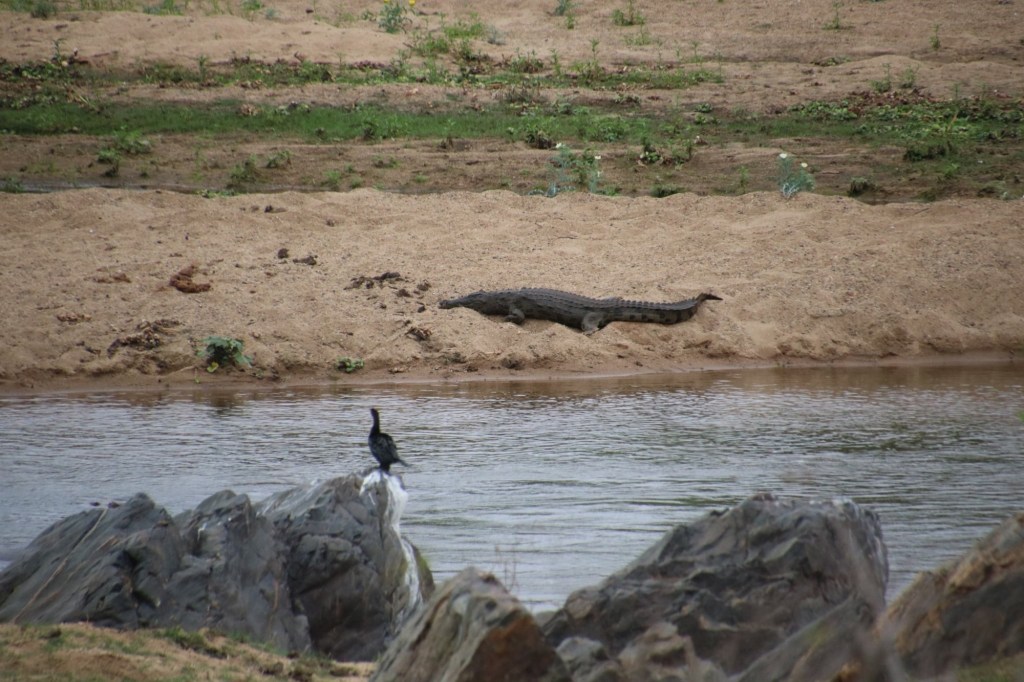
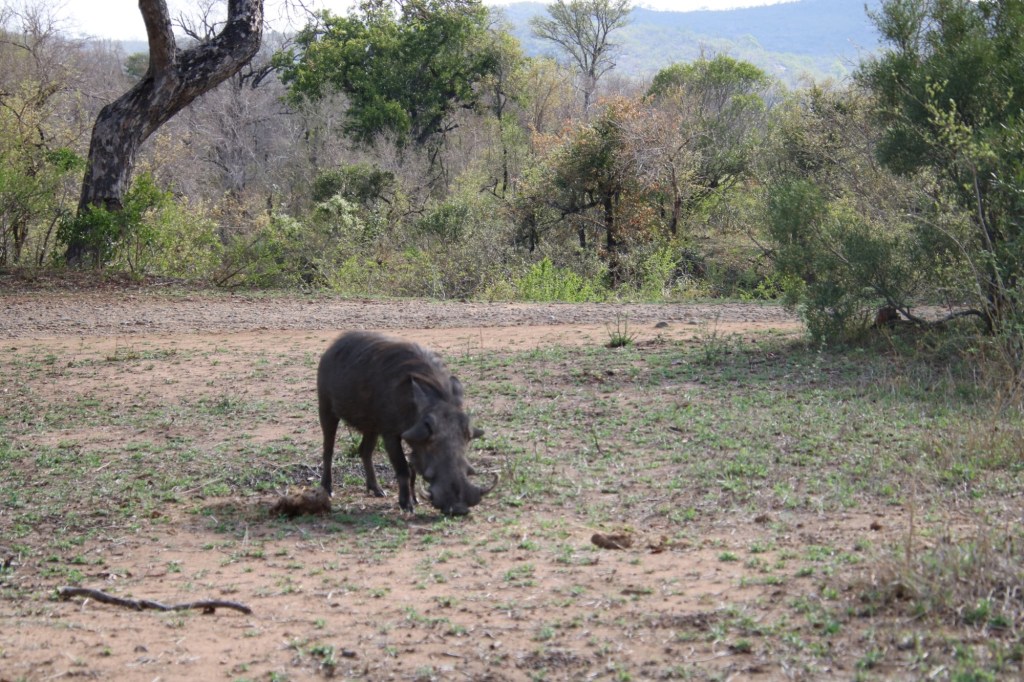
Our spotting count for the day was …we don’t include the sunset drive spots because it’s too difficult to record bouncing up and down all the time.. 99+ impala, 65 elephant, 6 squirrel, 13 warthog, 58 zebra, 63 waterbuck, 13 kudu, 21 giraffe, 6 yellow-billed stork, 48 buffalo, 2 yellow billed hornbill, 2 quail, 8 spur-fowl, 37 hippo, 1 grey lourie, 1 nyala, 1 African fish eagle, 21 Chacma baboons, 2 saddle-billed stork, 4 tsessebe, 3 vervet monkeys, 1 wildebeest, 9 WBV, 1 lilac breasted roller, 1 martial eagle……what a prolific game drive!

We wandered across to the carpark for the sunset drive at 4.15pm. I was immediately pounced upon by some colourfully dressed ladies who wanted their photos taken with the white, blonde lady….i was grateful when another couple joined us and shifted the photographic lime lite to them. It was a strange experience.

When the small 10 seater Safari vehicle arrived we quickly jumped on. While the driver did his paper work another group of local visitors jumped on the vehicle to have their photos taken on a Safari vehicle with the white people…it was all a bit overwhelming and surreal. We were glad when the driver returned along with 2 more guests who sat on the row of seats infront of us. Delight introduced himself, reminded us of the Safari vehicle game drive etiquette and informed us that the extra two people were also game rangers/ guides from one of the local 5* reserves. Great we had 3 guides instead of just one. We set of for out 3 hour drive with high hopes.

Delight followed the same route we had been in the morning. We saw some lovely sights along the river banks . Including 2 more tsessebe. He stopped several times to talk about both lion and impala scat- poo!! We went to where the leopard had been seen but the remaining car said it had already left the tree and disappeared into the undergrowth. We did however catch sight of a fish eagle.

On our return trip a large eagle owl was seen in the twilight.

We went some time before sighting a Scops owl at the edge of the road. It flew into a tree and we watched it for a while.

A couple of adorable bush babies were seen leaping around the bushes. Quite close to camp we saw a raging bush fire but Delight assured us it was a controlled burn. The Parks board does have areas they burn from time to time. They keep it under control by putting in firebreaks. It is so the earth regenerates and it allows seeds to germinate and fresh growth quickly appears. This is the time of year they do this, just before the rains begin.

On returning to camp we tipped Delight and thanked him for a very enjoyable 3 hour drive. We decided as it was 7.45pm we would eat in the restaurant. We both had pies, I had chicken, John had venison. Thankfully they had vegetables which were delightful, a mixture of cauliflower, broccoli, carrots, mange-toot, courgette, peppers and corn….i think it was frozen but it was very welcomed. Our meal cost less than £15 for us both. We returned to our chalet happy and tired….an excellent day in the bush….oh what a perfect day…

South Africa Safari 2025 Day 12 The Day of The Lion

Wow…what a night…the wind really came up..the ill-fitting door banged into its frame every few seconds, along with a lot of other bangs. At day break it was evident what the other bangs were…within our wire mesh enclosed veranda the chairs and bin had been blown around, a tree in front of our chalet had lost a large branch and section of its trunk, several people were chatting to Park staff about the damage to their chalet/huts, bin had flown everywhere leaving only their lids anchored to the ground…to put some it up there was a right mess everywhere…we were extremely grateful that both our car and our hut had escaped damage.

The wind had dropped considerably by morning and although it was a cold day, 18 degrees Celsius, we were ready for more game viewing. After our, now usual two yogurts for, breakfast John loaded the car. Bless him he has dome all the fetching and carrying…..even when he’s on holiday his packhorse duties continue….

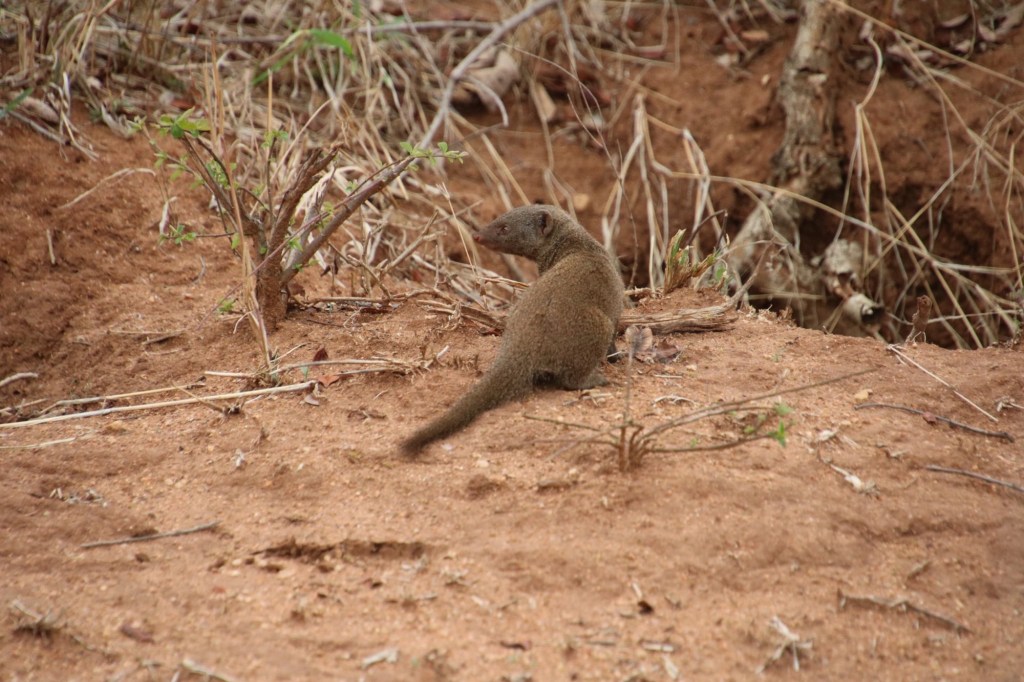
Off we went, we were moving on to Shingwedzi Camp, taking the main tar road north. We hadn’t expected to see a great deal because of the dry run we had had from Satara to Letaba….we were pleasantly surprised…Mother Nature likes to keep life interesting. John decided he was going to anticipate Giraffe as the first spot of the morning and I selected elephant…. We were both wrong!!! Just outside the Letaba camp gates 30 seconds after leaving was a largish troop of banded mongoose.

We continued on our way and guess what our next spot was? ……An elephant, in fact two….much to Johns annoyance as that put me at 4:1 up…..yes I did gloat…we are very competitive 🤣🤣🤣🤣 However just a short while after this we did see a giraffe.

In fact we saw pockets of wildlife for most of the trip. The landscape was once again different. Lots of quite thick dry bushes right up to the roadside. Quite often a movement would take us by surprise…..a large herd of elephant were right next to the road and we only noticed them at the last minute.

We stopped for various sightings along the way., although the photography was not easy through the more dense bush.

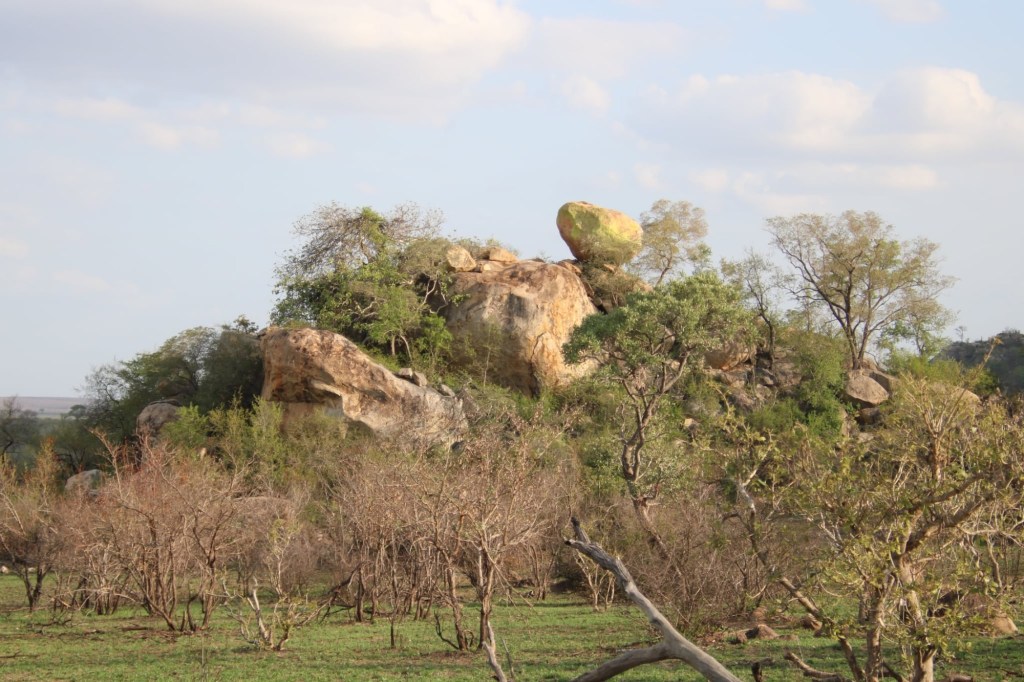
After a couple of hours the landscape changed again and we were back to anthills….we came to the conclusion that as the anthills were in very dry areas this was why we didn’t see much wildlife around them…..it didn’t stop us from looking.

Today could quite easily been called The Day of the Waterbuck. As we continued north and the landscape changed again saw some lovely small herds.

What seemed to be a dried rivermectin had some quite big pockets of water in it. These areas were love oasis and we saw a far denser population of impalas, zebra, wildebeest, waterbuck and elephant around them.

About 109 kms- 3.5 hours drive with stops for wildlife sightings, we arrived at Shingwedzi camp. We booked in and were allocated chalet A6, which was near reception, the shop and the restaurant. Unfortunately there was no room on the sunset drive so we booked for the following night.

Our chalet was very pleasant…a little old style but spacious with a kitchen on its veranda, the fridge was inside …everything seemed to work although we certainly didn’t need the air conditioner…..infact I had put on the nice scarf John had bought be and he had kept the car window closed for much of the trip. The temperature had risen to 20 degrees for about an hour before dropping back to 17/18 degrees. We rested up in the chalet for a couple of hours.

At 4.pm we headed out of the camps back gate to drive down to the dam along the riverside. We hadn’t gone far when a vehicle infront of us blocked the road giving a Safari vehicle instructions to somewhere. The Safari vehicle sped off I. The direction we had come from so we pulled alongside the car in front and asked him if he had any info…he kindly told us he had seen 20 lions at the side of the S53 river loop. He told us how to get there and said it was about 10 minutes away. We spun the car around and headed after the Safari vehicle. 10 minutes was an understatement…after 20 minutes we were wondering if we’d been sent on a wild goose chase… we stopped to view a large herd of buffalo.

Where there’s buffalo there are often lions. It is a lions choice of food because they are big and will feed a full pride of lions. In fact lions have been known to follow a herd of buffalo for a month or until the buffalo wander out of the lions territory into another lions territory. The lions will hunt them every few days, The size of the pride determines how often they need to make a kill, the bigger the pride the more mouths they need to feed, the more often they need to hunt.

So we continued up the tar in the direction the Safari vehicle had gone. It was by now out of sight and our rather ancient Kruger map didn’t have the S53 marked on it. We don’t speed in Kruger the speed limit on the tar roads is 50km and on the dirt 40km. We usually do 45km on the tar as it’s a speed you can still spot at. Thankfully we kept to our self regulated speed because not long after the buffalo a policewoman was stood at the side of the road with a speed camera, an armed ranger guarded her and the vehicle was well hidden in the bush…..we passed without incident…however the car behind which had been haring down on us was stopped….a lesson to be learnt always stick to the speed limit or you can be fined, removed from the park and refused entry again….its really not worth speeding not just for the sake of the animals.

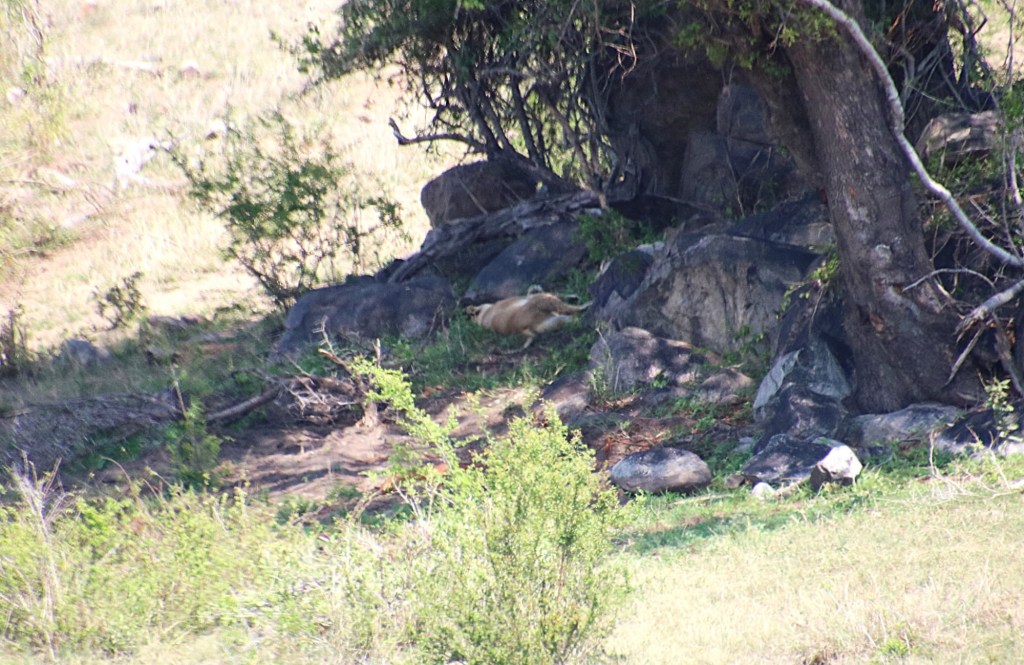
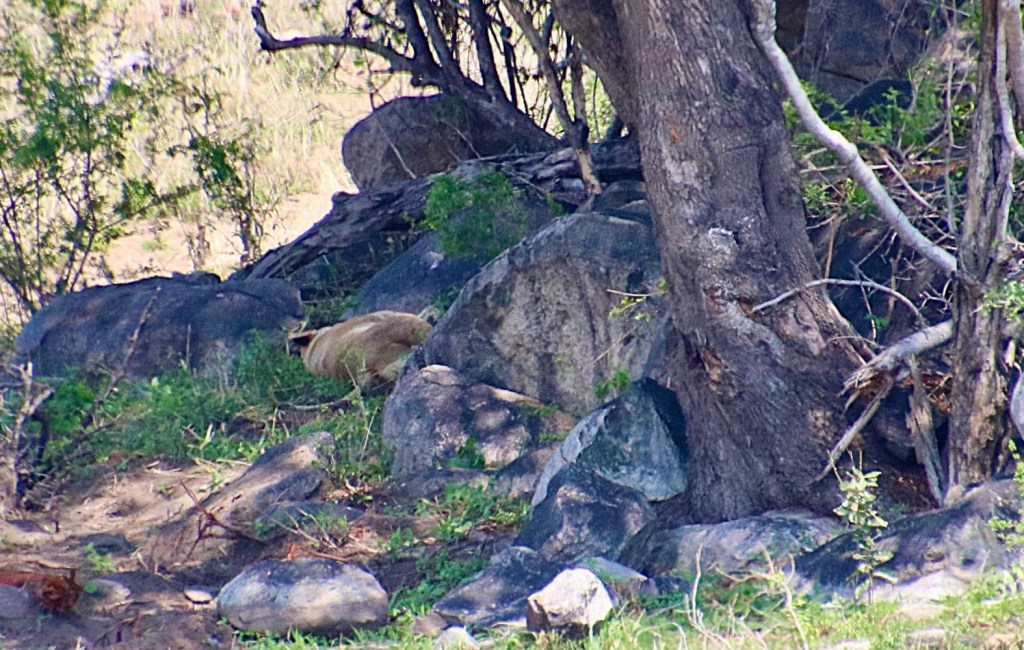
Just after the speed cop was a right turning yeah!!! The S53 a 2km loop. After about 1 km we came across the Safari vehicle and 3 other cars and a motorhome…under the bushes to 5he right were a large pride of lions sleeping. They were spread around under a variety of bushes, so everyone could get a view. A lovely sight…there were some adolescent cubs and lots of lionesses…we counted 11 in total.

The Safari vehicle didn’t watch for long before moving off, which meant we could get closer.

It’s always such a wonderful sight seeing the big cats in their totally natural environment. They all had big rounded bellies, so they had obviously eaten recently.

What joy. After watching for about 15 minutes we decided to complete the loop and head on back along the tar as we had no idea how long it would take us and it was already quite dark even though it was only just after 5pm.

We got back to camp at 5.45pm. Our days wildlife count was 99+ impala, 1 squirrel, 11 banded mongoose, 24 Guinea fowl, 7 yellow billed hornbill, 1 red billed hornbill, 1 crested barbet, 63 waterbuck, 19 elephant, 5 kudu, 13 giraffe, 29 wildebeest, 1 grey heron, 1 white stork, 2 nyala, 2 yellow billed stork, 36 zebra, 36 buffalo, 8 spurrfowl, 11 lion, 3 Chacma baboons, 16 Malibu storks…..extremely good for what we thought was going to be a pretty dry day for wildlife viewing.

We decided to eat in the restaurant because it seemed chilly outside and it was still a little windy…I don’t like braiis in the wind as I am frightened a spark may be caught on the chalets thatched roofs. We both decided to have T-bone steaks because it came with vegetables…we seem to have missed out on vegetables for quite a few days….unfortunatly when it arrived we were told they hadn’t got any vegetables so it just came with chips…..hey ho we tried.

We had a couple of games of cards and retired to bed early…….no need for the aircon tonight.

South African Safari 2025 Day 10 – The day of the Waterbuck

After a restless nights sleep, which involved plenty of exercise in the form of getting in and out of bed to turn on and off the air conditioning, we prepared for our journey up to Letaba. The weather was very different to yesterdays….yesterday at 11 am it was 36 degrees Celsius where as today it was only 24 degrees Celsius. Letaba camp is about 90km north of Satara. We haven’t been up this high for probably 10 years….basically because the game has been scarce and sightings were few and far between. However we had been unable to book into Satara ( our preferred area due to prolific game) for longer, as it was full. So being flexible we decided to carry on up the park. John has never been to Punda Marie neither has he stayed in Shingwedzi. It must be about 20 years since I’ve stayed in the later…although for many years prior to this Shingwedzi was my favourite camp and I knew most the staff by name. We decided to stay 2 nights in Letaba before stopping in Shingwedzi for 3 nights….I couldn’t be persuaded to stay in Punda Marie, but have agreed to drive up there so John can have a look at the area. Many years ago I had booked Punda Marie, my son was a youngster and they provided me with a mattress for him on the floor…..the mattress was so old and stained that I wouldn’t even have let my dog sleep on it…disgusting..and it has put me off staying there ever since…I am certain 30+ years later it is absolutely fine but my memories remain vivid so for us it’s a no-no.

Back to the present…we had a meagre breakfast of 2 yogurts each and set off up the tar. The terrain is very different here…wide open flat spaces of nothingness. Our first half an hour was extremely enjoyable with 99+ zebra and wilderness traversing the plains.

After this our sightings became few and far between. We saw a few families of elephants in the almost dried up waterholes the road passes by. A couple of these waterholes had a flurry of mixed sightings. One in particular had zebra, Wildebeest, kudu and impala all streaming in longlines down to and then away from the water. A lovely view.

Some of the little streams of water had waterbuck on the shallow banks.

The Waterbuck is a large antelope, it has reddish brown course fur with white around its nose and eyes and a white collar around its neck. It also has a very distinctive “follow-me” white circle on its rump…many say this looks like a toilet seat or even a target 🤣. Like many antelope the waterbuck male has horns where as the slightly smaller female does not. The waterbuck is a very strong swimmer, it uses its hollow bearded neck hair for buoyancy. Its fur releases a smelly musky oil which repels water. We have also been told on numerous occasions by game rangers that the waterbuck also releases this oil when it is frightened. The lion is its main predator but has learnt to leave it alone because the oil it releases taints its meat which makes it unpalatable.

Our trip continued along the tar. As we drew closer to Letaba we decided to take one of the gravel road loops down and along the Letaba river. We saw zebra, elephant and impala.

We stopped at the edge of the water for elevenses. We are now reduced to park purchased processed cheese on some Woolworths crackers..not too bad. We watched three waterbuck walk along in front of us…they had a youngster with them. We saw a saddle-billed stork waddle along. An enjoyable half hour break from driving.

Our total viewing for the day was 99+ impala, 99+ wildebeest, 99+ zebra, 15 giraffe, 3 warthog, 2 grey Lourie, 6 kudu, 4 hippo, 37 elephants, 28 buffalo, 17 waterbuck, 2 steenbok, 1 bateleur, 1 saddlebilled stork, 1 squirrel.

We arrived at the Letaba reception at around 11.30….. too early for check in which is 2 pm. However we did book on to the sunset drive. We went to wait until check-in at the restaurant and decided to have a toasted bacon sandwich for lunch while overlooking the river, with its many islands which appear during the dry season.

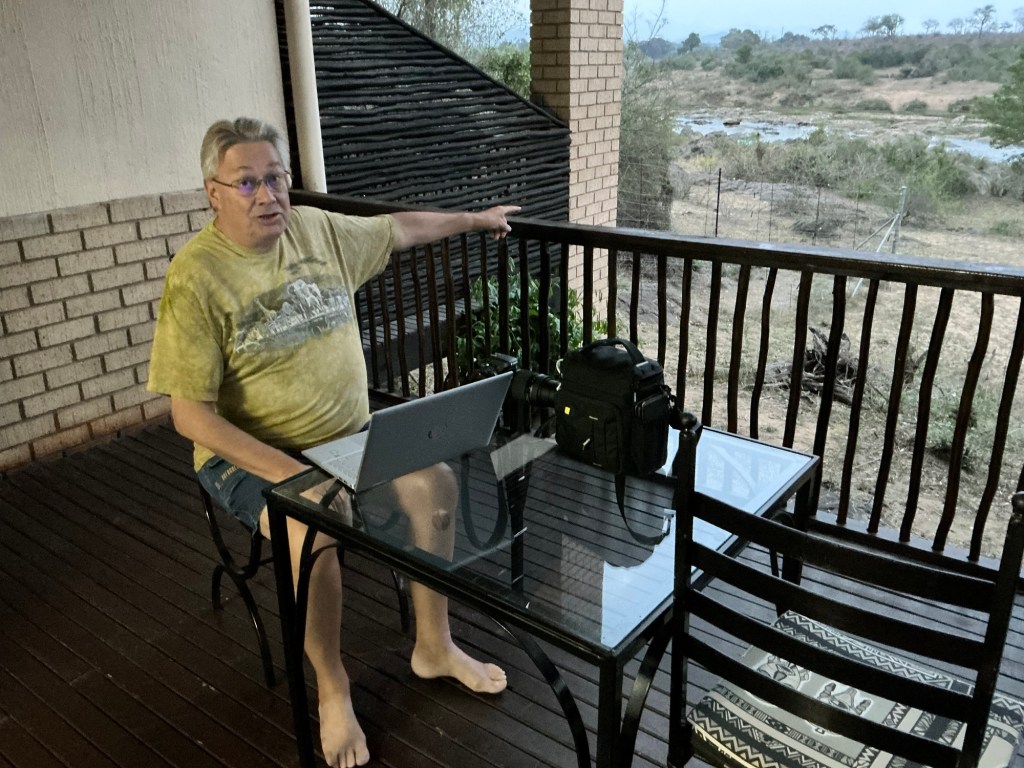
At 2 pm we picked up our chalet key. Once again the chalet was the tired old variety but as it was on the perimeter fence we overlooked the river. It had a closed in veranda, with mosquito netting and wire , which makes you feel as if you are in a cage looking out🤣. This time we had a microwave, toaster, kettle ( thank heavens…can’t wait for a coffee), and full utensils but no hotplate or sink…however there is a large tub for putting your dirty dishes in and carrying to the communal kitchen to wash up….ummmm…no! I can’t see either John or I doing that so I guess it will be the restaurant for the next two nights🤣🤣

We arrived early for the sunset drive and our name was first on the list so we got a choice of where we wanted to sit. The truck was almost completely full, but this time with people who actually wanted to game view and knew the etiquette of the bush.

Off we set with our driver and guide “Happiness” . Unfortunate her name did not deliver. We saw lots of giraffes. Several were stood in “ push-me pull-me” positions. Lots of animals do this in particular zebras and impala, it is so they each look in different directions so they can see if any predators are coming.

The 3 hour drive showed us giraffe and elephant. A rather lovely sighting was a nyala buck and 3 cows in a dried river bed. As we were nearing the end of our drive we saw a black backed jackal, however Happiness was reluctant to reverse the truck so that everyone could see it. Just before we turned in the camp gate 2 hyena appeared, but once again Happiness didn’t reverse even though most the truck were asking her to….a little disappointing…..so for the first time this trip we decided not to tip….we don’t believe in tipping when it’s not earnt or deserving.

We headed for the restaurant and once again John had Venison pot pie and I had roasted chicken and …yes I did have a Savannah light🤣

The night saw us playing cards in the cage before an early to bed was required.

Tallinn, Estonia – BEEN THERE GOT THE T-SHIRT

Estonia is a country situated  in Northern Europe it has borders on the west with the Baltic Sea, on the north with the Gulf of Finland, on the south with Latvia and on the east with Lake Peipsi and Russia. It was formally part of The Soviet Union. Soviet authorities recognised Estonian independence on 6 September 1991, and on 17 September 1991 Estonia was admitted into the United Nations. 

Estonia consists of the mainland and a lot of islands……if you ask one Estonia they’ll tell you 1500 and if you ask another you’ll be told 2300 Islands….so I’ll just say a lot!!! The largest islands are Saaremaa and Hiiumaa. Estonia covers a total of 17,504 square miles(45,335sqkm).  It has a very diverse terrain which includes rocky beaches, old forests and many lakes. It’s attractiveness is not just one of scenery but it also in its very aesthetically beautiful castles, churches and hilltop fortresses. 

We visited Estonia as part of a Northern Europe, Capital city, cruise with Princess Cruises. We had had it booked before the arrival of the pandemic and it had been moved twice….so we were delighted to finally go  even though the itinerary was much changed from our original booking. This had been pre-invasion of Russia into Ukrainian and had included both St Petersburg and Helsinki, both of which were removed from the itinerary, the former because it was a country at war and the later because it was too close to Russia. 

Our trip to Estonia included a day trip to Tallinn, it’s capital city. Tallinn has a population of about 461,000. Tallinn is renowned for its preserved Old Town and museums. Our coach picked us up at the port and took us to the monument complex which commemorates the victims of communism. 

Our next stop was the Tallinn Song Festival Grounds it is valued architecturally and is the first post-war building in Tallinn which was completed in 1960. When not being used for The Song Festival the park is open for walking, sports activities and having a picnic. There is a beautiful statue of Gustav Ernesaks  who was an Estonia composer who died in 1993. The statue of him sitting overlooking the festival ground was erected in 2004. 

The coach parked up outside the old city walls and we followed our guide to Toompea Hill. Toompea or “Upper Town” is the home of some of Tallinn’s oldest architectural wonders and home to Palace Square. Our first stop was Alexander Nevsky Cathedral . This is a historic Russian Orthodox Cathedral. St. Alexander Nevsky Cathedral serves as the dominating landmark in Palace Square, the cathedral’s cupolas and golden crosses rise high above the rooftops.

Turn your back on the Cathedral and you come face to face with Toompea Castle. The castle with its late Baroque façade was built between 1767 and 1773 and sits on the site of the foundations of a 13th century fortress. It’s outside wall is pink which was an attractive contrast to the wet dark cobbles of the area on this particular grey rainy day. The castle is now home to the Parliamentary buildings.

We then slipped and slid our way around the streets, if it hadn’t been for the heavy rain we would have been more enthusiastic about the history and beauty of the quaint streets. Instead of concentrating on what our guide was saying we were more concerned with staying upright and keeping warm. We made our way to Piiskopi Viewing point. It was worth it …the views were terrific. We looked down on Lowe Old Town. Our guide pointed out many buildings but we were ready to scurry into a tourist souvenir shop and get into the warm and out of the rain for a few minutes.

We made our way back to the coach which returned us to the port terminal. The weather really impacted on our tour and we were a bit disappointed that we couldn’t appreciate this obviously beautiful historical capital city….maybe sometime we will get to visit again.

Bonaire, Caribbean- BEEN THERE GOT THE T-SHIRT

Bonaire is a Caribbean island which forms part of the ABC islands. Aruba, Bonaire and Curaçao are three islands closely located which are all special municipality’s within the Kingdom of the Netherlands in the western most group of the long arc of Islands, known as the  Lesser Antilles in the Caribbean Sea.

Bonaire lies 50 miles (80 km) north of the Venezuelan coast and 20 miles (32 km) east of Curaçao. The capital is Kralendijk.

The northern part is hilly, with a peak, Brandaris, 787 feet (240 metres) high, while the southern part is flat, with desert like vegetation.

We have cruised into Bonaire on numerous occasions. However they have recently introduced a US$75 per person visitor tax so less cruise ships are stopping at this delightful island. This is perhaps why the tax has been introduced as some Caribbean Islands dislike the influx of thousands of tourists who arrive by cruise ship and spend very little of the much needed foreign exchange, which boosts their economy. They are perhaps trying to encourage the single destination holiday maker who stays in their hotels, eats in their restaurants and gets a greater understanding of the eco-systems they are trying hard to protect.
There is lots to do and see on Bonaire and our trips have included visiting Goto Lake. This used to be a well known area for large flamboyances of flamingo. However every time we have visited there have only been a couple and the main Flamboyance have now made Pink Brine Lake their home. Goto lake is still a charming, picturesque place to visit.

The island grows a lot of cactus. In the centre of Rincon The Cadushy Distillery can be found. It makes a unique Cactus liqueur which has won awards and has created another tourist destination.

During our tour we saw several wild donkeys. These were originally used for labour by the Spanish, who brought them over with them, in the 17th Century. As modern technology took over these animals were no longer required and left to roam wild. there is a Donkey Sanctuary on Bonaire which also attracts tourists.

We have thoroughly enjoyed touring around Bonaire and seeing its many varied sights.

On leaving the Island by Cruise ship you get a great view of the salt pans and the piles of extracted salt. Since the Dutch gained power in the 17th Century, salt has been an important export. The extraction declined at the end of slavery. Today it is once again in full production after the industry was revived by Cargill’s a Canadian company.

Screenshot